
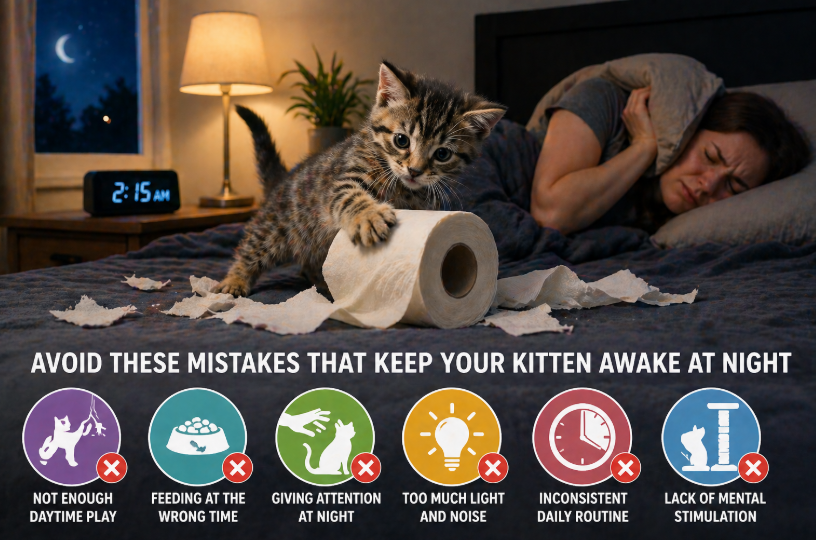
If your kitten awake at night, it can feel like you are living on a completely different schedule than your pet. While kittens are naturally energetic, persistent nighttime activity is often caused by avoidable mistakes. Many new owners unknowingly create habits that encourage late-night energy instead of restful sleep. Fortunately, once you understand what is happening, you can make small changes that lead to big improvements.
Kittens do not stay awake at night just to be difficult. Instead, their behavior is usually tied to routine, stimulation, and unmet needs. By identifying what is going wrong, you can correct the problem early. When you avoid these mistakes, your kitten awake at night behavior will gradually decrease, leading to calmer evenings and better sleep for both of you.
Mistake One Ignoring Daytime Activity Needs
One of the biggest reasons a kitten awake at night is lack of activity during the day. Many kittens spend long hours sleeping, especially in quiet homes. While this may seem harmless, it often leads to energy buildup that gets released after dark.
To fix this, introduce regular play sessions throughout the day. These do not need to be long, but they should be engaging. Toys that encourage chasing and jumping help burn energy and satisfy natural instincts.
Additionally, vary activities to prevent boredom. Rotate toys or introduce new objects to keep your kitten interested. By increasing daytime stimulation, you reduce the chances that your kitten awake at night due to excess energy.
Mistake Two Skipping Evening Play Sessions
Even if your kitten stays active during the day, skipping evening play is a major mistake. The evening is when kittens naturally feel most alert. Without a proper outlet, this energy often turns into nighttime chaos.
A focused play session before bedtime is essential. Aim for at least 15 to 20 minutes of active play. Use interactive toys that mimic prey, as these trigger natural hunting behavior.
After play, your kitten will feel more relaxed and ready to wind down. When this step is missing, your kitten awake at night becomes much more likely.
Consistency is important here. Evening play should become part of your daily routine.
Mistake Three Feeding At The Wrong Time
Feeding habits play a bigger role than many people realize. If your kitten awake at night, feeding too early in the evening could be part of the problem.
Kittens follow a natural cycle of hunt, eat, and sleep. If they eat too early, they may become hungry again later. This can lead to restlessness or vocal behavior during the night.
To fix this, feed your kitten after evening play. This timing helps them feel full and satisfied as they transition into sleep.
Additionally, make sure they receive enough food throughout the day. Balanced feeding supports stable energy levels and reduces nighttime hunger.
Mistake Four Encouraging Nighttime Interaction
Many owners unintentionally reinforce behavior that keeps their kitten awake at night. When a kitten becomes active or noisy, it is tempting to respond with attention.
However, this can create a cycle. If your kitten learns that nighttime activity leads to play or interaction, they will repeat it. Over time, this reinforces the behavior instead of reducing it.
Instead, keep nighttime responses minimal. Avoid playing, feeding, or engaging when your kitten is active. Although this can be difficult, it teaches your kitten that night is not for attention.
By setting clear boundaries, you reduce the likelihood that your kitten awake at night becomes a long-term habit.
Mistake Five Creating A Stimulating Night Environment
Another common mistake that keeps a kitten awake at night is a stimulating environment. Bright lights, noise, or easily accessible toys can encourage activity when your kitten should be resting.
To prevent this, create a calm nighttime setting. Dim the lights and reduce noise levels. Keep the environment consistent so your kitten understands that nighttime is different from daytime.
Additionally, remove highly stimulating toys before bed. While toys are important during the day, they can trigger activity at night.
A peaceful environment supports relaxation and helps your kitten settle more easily.
Mistake Six Inconsistent Daily Routines
Inconsistency is one of the biggest challenges when dealing with a kitten awake at night. If feeding, play, and sleep times change frequently, your kitten may struggle to understand when to rest.
Kittens thrive on routine. When they know what to expect, they feel more secure and relaxed. Without structure, their energy becomes unpredictable.
To fix this, establish a daily schedule. Set regular times for meals, play sessions, and bedtime. Follow the same sequence each day to build familiarity.
Over time, your kitten will adjust to the routine. This consistency helps reduce confusion and improves nighttime behavior.
Mistake Seven Not Providing Enough Enrichment
Boredom can also lead to a kitten awake at night. If your kitten does not have enough stimulation, they may look for ways to entertain themselves after dark.
Providing enrichment during the day is essential. This can include climbing structures, scratching posts, and puzzle toys. These items encourage exploration and mental engagement.
Additionally, placing a perch near a window can provide visual stimulation. Watching outdoor activity can keep your kitten entertained without extra effort.
By enriching your kitten’s environment, you reduce boredom and prevent nighttime restlessness.
Mistake Eight Expecting Immediate Results
Many owners become frustrated when their kitten awake at night behavior does not change quickly. However, adjusting routines takes time.
Kittens need consistency and patience to develop new habits. Sudden changes or inconsistent responses can slow progress.
Instead, focus on gradual improvement. Small changes in behavior are a sign that your approach is working. Over time, these improvements add up.
Remember that kittens also mature naturally. As they grow, their energy levels become more balanced. Combined with a proper routine, this leads to better sleep patterns.
Mistake Nine Overstimulating Before Bed
While play is important, too much stimulation right before bed can have the opposite effect. If play is overly intense or prolonged, your kitten may become more alert instead of relaxed.
To avoid this, end play sessions calmly. Gradually reduce intensity and transition into feeding. This helps signal that activity is ending.
Additionally, keep the environment quiet after play. Avoid sudden noise or excitement that could trigger another burst of energy.
Balancing stimulation is key. The goal is to tire your kitten, not overstimulate them.
Conclusion
If your kitten awake at night, it is often the result of simple mistakes that can be corrected with the right approach. By focusing on proper play timing, feeding routines, and environmental factors, you can guide your kitten toward better habits.
Consistency, patience, and understanding are the most important tools. While change may not happen overnight, steady progress leads to lasting results.
In the end, your goal is to create a routine that aligns with your kitten’s natural behavior while supporting your own sleep. When these elements come together, your nights become calmer, and your kitten becomes more balanced and content.
FAQ
- Why does my kitten stay active late at night?
Kittens are naturally active during evening hours, especially if they have excess energy from the day. - Can feeding schedule affect nighttime behavior?
Yes, feeding too early or inconsistently can lead to hunger and restlessness at night. - Should I play with my kitten right before bed?
Yes, but follow play with feeding and a calm routine to encourage relaxation. - How long does it take to fix sleep issues?
Most kittens adjust within one to two weeks with consistent routines and proper care. - Is it normal for kittens to wake up at night?
Yes, but with the right habits, you can reduce how often and how intense the activity becomes.