Bringing a new kitten into your home is an exciting adventure, and one of the first crucial milestones is achieving successful kitten litter training. While most kittens naturally gravitate towards using a litter box, setting them up for success from day one can prevent accidents, frustration, and ensure a clean, harmonious home environment. At Kitten Care Basics, we understand that even seemingly simple tasks can feel daunting for new owners, which is why we’ve put together this practical, step-by-step guide to make litter training a breeze.
Understanding Your Kitten’s Natural Instincts
Cats are inherently clean animals. They instinctively seek out soft, diggable material to eliminate in, and then cover their waste to hide their scent from predators. This natural inclination is your greatest asset in litter training. Your role is to provide the right environment and guidance to tap into these instincts effectively.
Setting Up for Litter Box Success
Before your kitten even arrives, thoughtful preparation is key for training your kitten to use a litter box. Indeed, a well-prepared environment significantly increases the chances of quick adaptation.
1. Choose the Right Litter Box
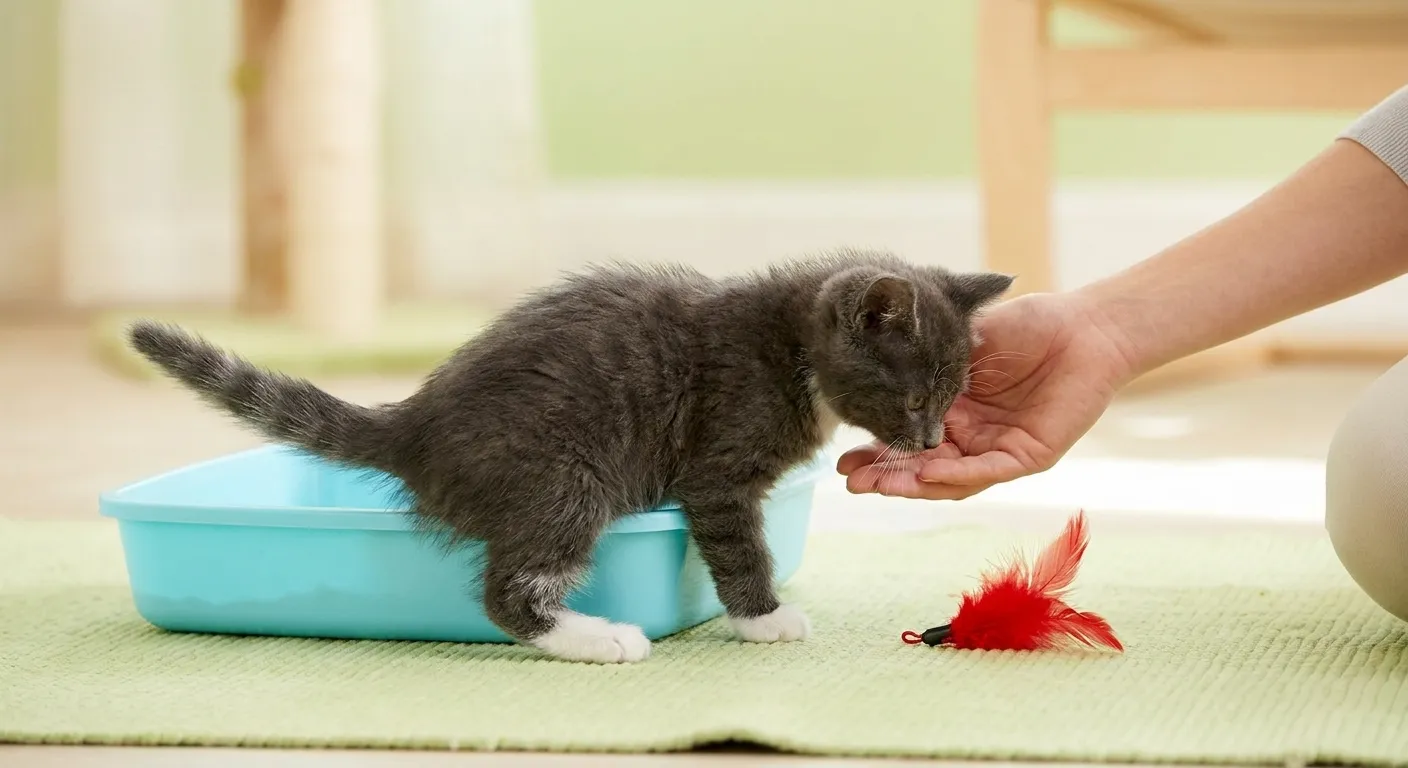
- Size Matters: For a tiny kitten, a large, high-sided litter box can be intimidating and difficult to enter. Therefore, start with a low-sided tray, even a disposable aluminum baking pan, that they can easily step into. You can transition to a larger box as they grow.
- Number of Boxes: The general rule is one litter box per cat, plus one extra. For a kitten, start with at least two boxes placed in different, easily accessible locations. This strategy helps prevent accidents.
- Type of Box: While covered boxes offer privacy, they can trap odors and make some kittens feel claustrophobic. Start with an open tray. If your kitten seems to prefer privacy later, you can experiment.
2. Select the Ideal Litter
- Unscented, Fine-Grained: Most kittens prefer unscented, fine-grained clumping clay litter as it mimics natural soil texture and is gentle on their paws. Avoid scented litters, as the perfumes can be off-putting to a kitten’s sensitive nose.
- Avoid Dust: Choose a low-dust formula to protect their developing respiratory system. Furthermore, low-dust options are better for your own respiratory health.
- Consistency: Once you find a litter your kitten likes, stick with it. Sudden changes can lead to aversion.
3. Strategic Placement
Proper placement is just as important as the type of box or litter. Thoughtful positioning helps your kitten feel secure and encourages consistent use.
- Quiet & Accessible: Place litter boxes in quiet, private, yet easily accessible areas. Avoid high-traffic zones, loud appliances, or next to their food and water bowls.
- Not Hidden: Don’t hide them away in dark corners where your kitten might feel trapped or forget where they are. They need to be easily found.
- Multiple Locations: Especially in a larger home, having multiple boxes ensures one is always within easy reach, preventing accidents during playtime or after waking up. For more on preparing your home, see our guide on Kitten-Proofing Your Home: Creating a Safe Haven.
The Training Process: Gentle Guidance
Once your setup is ready, the actual teaching litter habits process is usually straightforward. Patience and positive reinforcement are key elements here. Remember, every kitten learns at their own pace.
1. Initial Introduction
As soon as you bring your kitten home, gently place them in one of the litter boxes. Allow them to explore and sniff around. You might even gently mimic a digging motion with your finger in the litter. This helps them understand the purpose of the box. Do not force them to stay.
2. Supervised Exploration
For the first few days, keep your kitten in a smaller, confined area with easy access to a litter box. This could be a single room or a large playpen. This limited space helps them quickly learn where the litter box is located. Gradually expand their access to other parts of your home as they consistently use the box.
3. Timed Trips to the Box
Kittens often need to eliminate after waking up, after eating, and after playing. Anticipate these times and gently place your kitten in the litter box. Stay with them for a minute or two, offering soft encouragement. If they use the box, praise them with gentle words and perhaps a small treat. This positive association reinforces their good behavior.
4. Cleaning Accidents Properly
Accidents will happen, especially during the initial stages of training. It’s crucial not to scold or punish your kitten. This can create fear and anxiety, making them more likely to eliminate in hidden spots. Instead, clean accidents thoroughly using an enzymatic cleaner. These cleaners neutralize odors, preventing your kitten from being attracted back to the same spot. Ordinary cleaners might mask the smell for humans but not for a kitten’s sensitive nose.
Troubleshooting Common Litter Training Challenges
Even with the best preparation, you might encounter some bumps in the road. Knowing how to address these challenges can make all the difference in achieving successful kitten litter training.
Litter Box Aversion
If your kitten suddenly stops using the litter box, or avoids it entirely, there might be an underlying issue. Consider these possibilities:
- Litter Type: Have you recently changed litters? Revert to the previous type if possible.
- Cleanliness: A dirty litter box is a common reason for aversion. Cats are fastidious; ensure you scoop at least twice daily and perform a full litter change and box cleaning weekly.
- Location: Has something changed in the litter box’s location? Is it now too noisy, too public, or near something frightening?
- Medical Issues: Painful urination or defecation due to a urinary tract infection (UTI) or other health problems can cause a kitten to associate the litter box with discomfort. If aversion persists, consult your veterinarian immediately. For more on health, review Common Kitten Health Issues: What to Watch For.
Eliminating Outside the Box
When a kitten eliminates outside the box, it’s not typically out of spite. It’s a sign that something isn’t right. Often, it relates to the factors above or a preference for a different texture. Try offering different types of litter in separate boxes to see if your kitten has a preference. Sometimes, a kitten might prefer a softer surface, like a rug, if the litter box isn’t comfortable.
Maintaining a Clean Litter Environment
Ongoing cleanliness is paramount for ongoing successful litter box habits. A clean litter box is inviting; a dirty one is repulsive.
- Scoop Regularly: Scoop solid waste and urine clumps at least twice a day. Many owners find scooping morning and night works best.
- Change Litter Completely: Depending on the type of litter and number of cats, aim to completely empty, wash the box with mild soap and water, and refill with fresh litter weekly or bi-weekly. Avoid harsh chemicals or strong-smelling cleaners, which can deter your kitten.
- Replenish Litter: Keep the litter depth consistent, typically 2-3 inches. Kittens need enough litter to dig and cover comfortably.
Remember, the goal is to make using the litter box the easiest and most pleasant option for your kitten. By understanding their natural needs and providing a consistent, clean environment, you are well on your way to achieving a clean and happy home. For further reading on feline health, you can consult resources like the ASPCA’s guide on litter box problems or The Humane Society’s advice on cat litter box issues.
Advanced Tips for Litter Training Success
Once your kitten consistently uses the litter box, you can refine their routine. This includes considering future changes and subtle behavioral cues. Indeed, observing your kitten closely will help you anticipate their needs.
Gradual Transitions
If you need to move a litter box, do so gradually. Move it a few inches each day until it reaches its new desired location. This slow change allows your kitten to adjust without confusion. Similarly, if you plan to transition to a different type of litter box (e.g., a covered one), introduce it alongside the familiar one first.
Monitoring Litter Box Habits
Pay attention to your kitten’s litter box habits. Any sudden changes in frequency, amount, or straining could indicate a health issue. Early detection of problems can prevent more serious complications. This vigilance is a critical part of Kitten Healthy Growth Tips.
Addressing Behavioral Changes
Sometimes, changes in a kitten’s environment or routine can impact their litter box use. A new pet, a move, or even a change in your schedule can stress a kitten. If you notice your kitten suddenly stops using the box, consider any recent changes and try to provide extra reassurance and stability. Understanding Decoding Your Kitten’s Subtle Signals: A Guide to Kitten Body Language can be very helpful here.
Conclusion: A Clean Start for Your Feline Friend
Achieving successful kitten litter training is a rewarding part of bringing a new feline companion into your life. By understanding your kitten’s natural instincts, providing the right setup, and offering gentle, consistent guidance, you can ensure a smooth transition to a clean home. Remember, patience is key, and positive reinforcement goes a long way. At Kitten Care Basics, we are committed to helping you navigate every aspect of new kitten ownership, fostering a happy and healthy relationship with your furry friend. With these steps, your kitten will master their litter box in no time, contributing to a harmonious household for years to come. For more on welcoming your new companion, check out Welcoming a New Kitten: Your Essential First Steps Guide for a Smooth Transition.
FAQ Section
What is the best type of litter for a young kitten?
Most kittens prefer unscented, fine-grained clumping clay litter. This type mimics natural soil, which they instinctively seek out. It’s also gentle on their paws and typically low in dust.
How many litter boxes should I have for one kitten?
A good rule of thumb is one litter box per cat, plus one extra. For a single kitten, starting with at least two boxes placed in different, easily accessible locations is recommended. This ensures they always have a convenient option.
What should I do if my kitten has an accident outside the litter box?
If your kitten has an accident, clean it thoroughly with an enzymatic cleaner. This neutralizes the odor, preventing your kitten from being attracted back to the same spot. Importantly, never scold or punish your kitten for accidents, as this can create fear and anxiety.
How often should I clean my kitten’s litter box?
You should scoop solid waste and urine clumps at least twice a day. Additionally, the entire litter box should be emptied, washed with mild soap and water, and refilled with fresh litter weekly or bi-weekly, depending on usage.
Can I train an older kitten to use a litter box?
Yes, older kittens and even adult cats can be litter trained. The principles remain the same: provide an appropriate litter box and litter, place it in a quiet location, and use positive reinforcement. Patience might be needed, especially if the cat has developed other habits.