
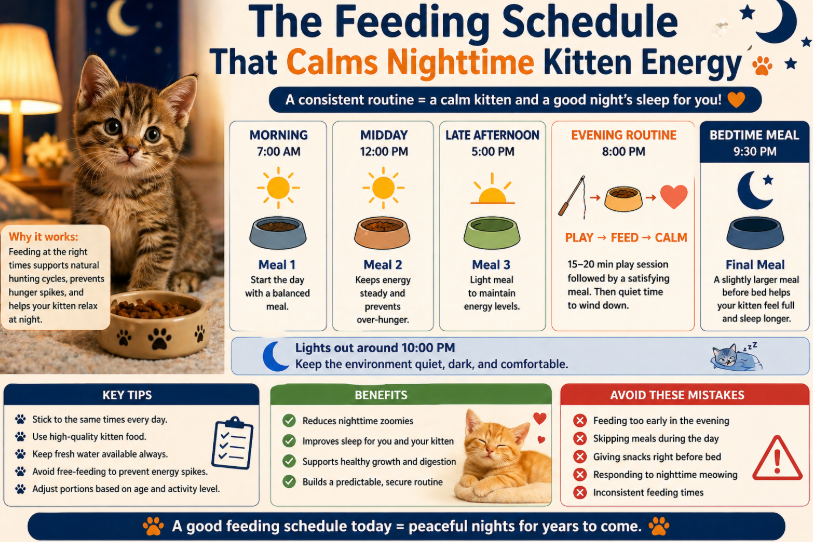
If you want calmer evenings, creating a kitten feeding schedule nighttime routine can make a significant difference. Many kittens become highly active after dark, which often leads to zoomies, noise, and interrupted sleep. However, this behavior is not random. It is closely linked to energy levels, feeding patterns, and natural instincts. Once you understand how feeding affects behavior, you can guide your kitten toward a more relaxed nighttime routine.
A structured kitten feeding schedule nighttime approach helps regulate energy, digestion, and sleep cycles. Instead of dealing with unpredictable bursts of activity, you can create a rhythm that encourages your kitten to wind down at the right time. With consistency and a few simple adjustments, you can transform restless nights into peaceful ones.
Why Feeding Timing Affects Nighttime Energy
To understand why a kitten feeding schedule nighttime plan works, it helps to look at natural feline behavior. Cats follow a simple cycle in the wild: hunt, eat, groom, and sleep. This pattern is deeply ingrained, even in domestic kittens.
When your kitten does not follow this cycle, their energy becomes unbalanced. For example, if they eat too early or too little, they may become hungry or restless later. As a result, they release energy at night instead of settling down.
By adjusting feeding times, you align your kitten’s routine with their instincts. After eating, their body naturally shifts toward relaxation. Therefore, using a kitten feeding schedule nighttime strategy allows you to guide that transition more effectively.
Building The Ideal Evening Routine Around Feeding
A successful kitten feeding schedule nighttime routine starts with a structured evening plan. Feeding alone is not enough. Instead, it should be part of a sequence that prepares your kitten for rest.
Begin with an active play session about one hour before bedtime. This helps your kitten burn off excess energy and engage in natural hunting behavior. Immediately after play, offer a meal. This mimics the hunt and eat cycle, which signals the body to relax.
Following the meal, keep the environment calm. Dim the lights and reduce noise. Over time, your kitten will associate this pattern with sleep. As a result, the kitten feeding schedule nighttime routine becomes a powerful tool for controlling energy levels.
Consistency is essential. Repeating this routine every evening helps your kitten understand what to expect.
How Much And How Often To Feed Your Kitten
Another key factor in a kitten feeding schedule nighttime plan is portion size and frequency. Kittens have small stomachs and high energy needs, so they require multiple meals throughout the day.
Typically, young kittens should eat three to four small meals daily. Spacing these meals evenly prevents extreme hunger and energy spikes. Importantly, the final meal should occur after the evening play session.
This timing ensures your kitten feels satisfied before bedtime. When they are full, they are less likely to wake up and seek food or attention. As a result, the kitten feeding schedule nighttime strategy reduces both hunger-driven and energy-driven activity.
However, avoid overfeeding. Large meals can cause discomfort and disrupt sleep. Instead, focus on balanced portions that support steady energy levels.
Adjusting Daytime Feeding To Improve Nighttime Calm
While the evening routine is important, daytime feeding also plays a role in a kitten feeding schedule nighttime plan. If your kitten eats irregularly during the day, their energy levels may fluctuate.
Providing consistent meals throughout the day helps stabilize their metabolism. This reduces the chance of sudden hunger or bursts of energy at night. Additionally, scheduled feeding times create predictability, which helps kittens feel secure.
You can also combine feeding with short play sessions during the day. This approach spreads out activity and prevents energy from building up. As a result, your kitten is less likely to release that energy all at once during the night.
By managing both daytime and evening feeding, you create a balanced routine that supports calm behavior.
Choosing The Right Food For Better Nighttime Behavior
The type of food you use can also influence your kitten feeding schedule nighttime success. High-quality kitten food provides the nutrients needed for growth while supporting stable energy levels.
Look for food that contains balanced protein and fat. These nutrients help sustain energy without causing sudden spikes. Additionally, avoid foods with excessive fillers or sugars, as they can lead to hyperactivity.
Wet food can be particularly useful in the evening. It is easier to digest and can promote a feeling of fullness. This helps your kitten settle more comfortably after their final meal.
Consistency in diet is just as important as timing. Sudden changes can upset digestion and disrupt your routine. Therefore, maintain a steady diet that supports your kitten feeding schedule nighttime plan.
Common Mistakes That Disrupt Nighttime Calm
Even with a good plan, certain mistakes can interfere with your kitten feeding schedule nighttime routine. One common issue is feeding too early in the evening. If your kitten eats hours before bedtime, they may become hungry again later.
Another mistake is inconsistent timing. Changing feeding times frequently can confuse your kitten and disrupt their internal clock. As a result, they may become restless or vocal at night.
Additionally, feeding during nighttime activity can reinforce unwanted behavior. If your kitten learns that noise leads to food, they may continue the behavior.
To avoid these problems, stick to a consistent schedule and avoid rewarding nighttime activity. This ensures your kitten feeding schedule nighttime strategy remains effective.
How To Transition To A New Feeding Routine
If your current routine is not working, you can gradually shift to a kitten feeding schedule nighttime plan. Sudden changes may cause confusion, so it is best to adjust slowly.
Start by moving feeding times in small increments each day. For example, shift the evening meal closer to bedtime over several days. At the same time, introduce the play and feed sequence to reinforce the new pattern.
During the transition, monitor your kitten’s behavior. Look for signs of hunger, restlessness, or improved calmness. These signals help you adjust the routine as needed.
Patience is important. While some kittens adapt quickly, others need more time. With consistency, the new kitten feeding schedule nighttime routine will become natural.
Long Term Benefits Of A Structured Feeding Routine
Once established, a kitten feeding schedule nighttime plan offers long-term benefits. Not only does it reduce nighttime energy, but it also supports overall health and well-being.
Regular feeding improves digestion and helps maintain a healthy weight. Additionally, it creates a sense of security, which reduces anxiety-related behaviors.
Over time, your kitten will develop a predictable rhythm. This makes daily care easier and strengthens your bond. Furthermore, calm nights contribute to a more peaceful home environment.
By investing in a consistent routine early, you set the foundation for lifelong healthy habits.
Conclusion
A well-planned kitten feeding schedule nighttime routine can transform how your kitten behaves after dark. By aligning feeding times with natural instincts, you guide your kitten toward a calmer and more predictable pattern.
Through structured play, consistent meals, and a peaceful environment, you reduce energy spikes and encourage restful sleep. While the process requires patience, the results are rewarding.
In the end, the goal is balance. When your kitten’s needs are met at the right time, they feel secure and relaxed. With the right approach, your kitten feeding schedule nighttime plan will help create quieter nights and a happier home.
FAQ
- How many times should a kitten eat each day?
Most kittens need three to four small meals daily to support growth and maintain steady energy levels. - Can feeding before bed reduce nighttime activity?
Yes, feeding after evening play helps kittens feel full and encourages them to rest instead of staying active. - What type of food is best for evening feeding?
High-quality wet or balanced kitten food works well because it is easy to digest and keeps kittens satisfied longer. - Should I feed my kitten if it wakes me at night?
No, feeding at night can reinforce the behavior. Instead, maintain your schedule and meet needs before bedtime. - How long does it take to see results from a new routine?
Most kittens begin to adjust within one to two weeks when feeding times remain consistent.