
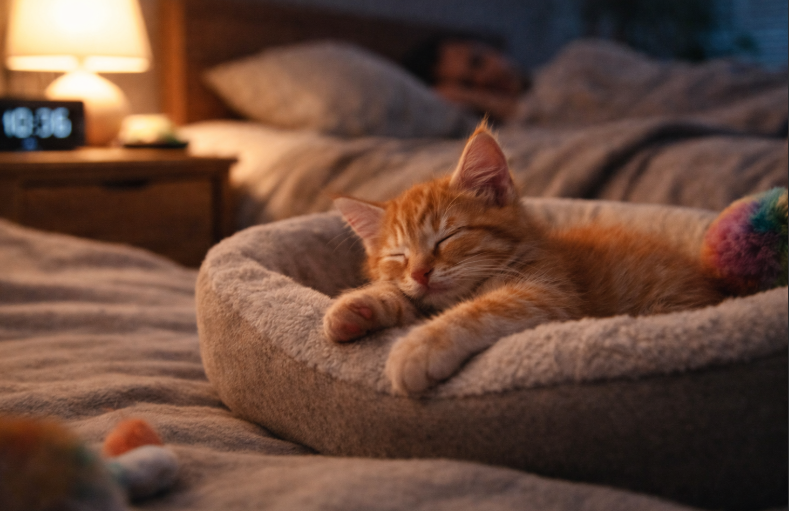
If your kitten keeps you awake with sudden bursts of energy, learning how to train kitten sleep night habits can make a huge difference. While it may feel frustrating, this behavior is completely normal for young cats. Kittens are naturally active during the evening and early morning, so their energy patterns rarely match human sleep schedules at first.
However, the good news is that you can gently guide your kitten toward a more restful routine. Instead of trying to force change overnight, it is more effective to create a structured environment that encourages sleep at the right time. When you understand why your kitten behaves this way, it becomes much easier to train kitten sleep night patterns successfully.
With consistency, patience, and the right techniques, your kitten will gradually adjust. Over time, those late-night zoomies can turn into peaceful nights for both of you.
Why Kittens Stay Awake at Night
Before you can train kitten sleep night behavior, it helps to understand why kittens are so active after dark. Cats are naturally crepuscular, which means they are most active at dawn and dusk. Even indoor kittens follow this instinct, which explains their nighttime energy.
During the day, kittens often nap for long periods. As a result, they build up energy that needs to be released later. When evening arrives, that stored energy leads to running, jumping, and playful behavior.
Additionally, quiet nighttime conditions can make small sounds and movements more noticeable. This stimulates curiosity and encourages activity. Therefore, trying to train kitten sleep night habits without addressing these natural instincts can be difficult.
Instead, working with your kitten’s natural rhythm allows you to guide their behavior more effectively.
The Power Of Evening Playtime
One of the most effective ways to train kitten sleep night routines is through structured play. Kittens need to burn energy, and if they do not get enough stimulation, they will release it when you are trying to sleep.
Scheduling an active play session in the evening helps redirect that energy. Use toys that mimic prey, such as feather wands or small moving objects. These engage your kitten’s hunting instincts and provide both physical and mental stimulation.
Timing is important. Play sessions should happen shortly before bedtime. This helps your kitten use up energy at the right moment, making it easier to settle down afterward.
Consistency also plays a key role. When you repeat this routine daily, your kitten begins to associate evening play with winding down. Over time, this makes it easier to train kitten sleep night behavior naturally.
Using Feeding To Encourage Sleep
Feeding routines are closely tied to sleep patterns. In the wild, cats follow a cycle of hunt, eat, and rest. You can use this natural behavior to train kitten sleep night habits at home.
After an evening play session, offer your kitten a meal. Eating after activity signals the body that it is time to relax. As a result, your kitten is more likely to settle down and sleep.
Avoid feeding too early in the evening, as this can lead to renewed energy later at night. Instead, align feeding with your desired sleep schedule.
Small adjustments in feeding times can have a big impact. When used correctly, this strategy becomes a powerful tool to train kitten sleep night routines without stress or force.
Creating A Calm Night Environment
Your home environment plays a major role when you train kitten sleep night behavior. A calm and predictable setting helps signal that nighttime is for rest, not activity.
Start by reducing stimulation before bed. Lower the lights and limit loud noises to create a relaxing atmosphere. This helps your kitten transition from play to rest more easily.
Providing a comfortable sleeping area is also important. Soft bedding in a quiet location gives your kitten a place to settle. Positioning it away from distractions helps encourage longer sleep periods.
Additionally, avoid engaging with your kitten during the night. If you respond to playful behavior, it can reinforce the habit. Instead, staying consistent helps your kitten learn that nighttime is not for interaction.
By creating the right environment, you support your efforts to train kitten sleep night habits more effectively.
Building A Consistent Routine
Routine is one of the most powerful tools when you want to train kitten sleep night patterns. Cats thrive on predictability, so a structured schedule helps regulate their behavior.
Establish a clear sequence each evening. Start with play, followed by feeding, and then a calm period before sleep. Repeating this routine daily helps your kitten understand what to expect.
Consistency is essential. Changing the schedule frequently can confuse your kitten and slow progress. Therefore, sticking to the same pattern each night leads to better results.
It is also helpful to maintain a consistent wake-up time. This reinforces a regular sleep cycle and prevents early morning disruptions.
When you commit to a routine, you create a stable environment that supports your goal to train kitten sleep night habits successfully.
Avoiding Common Training Mistakes
While trying to train kitten sleep night behavior, some common mistakes can delay progress. One of the biggest issues is giving attention during nighttime activity. Even negative attention can reinforce the behavior.
Another mistake is skipping playtime. Without enough stimulation, your kitten will naturally seek activity at night. Therefore, consistent play sessions are essential.
Inconsistent feeding schedules can also disrupt sleep patterns. Feeding at random times makes it harder for your kitten to settle into a routine.
Additionally, punishing your kitten for being active can create fear and confusion. Instead, focus on guiding behavior through positive routines and environment changes.
Avoiding these mistakes ensures that your efforts to train kitten sleep night habits remain effective and stress-free.
How Long Training Takes
Training a kitten takes time, so patience is important. While some kittens adjust within a few days, others may need several weeks to fully adapt.
Progress often happens gradually. You may notice shorter periods of nighttime activity before your kitten begins sleeping longer stretches. These small improvements are a sign that your routine is working.
Consistency speeds up the process. When you follow the same routine every day, your kitten learns faster and adapts more easily.
It is also important to remain calm during setbacks. Occasional bursts of nighttime activity are normal, especially during growth stages. Staying consistent helps maintain progress.
Over time, your efforts to train kitten sleep night patterns will lead to a more balanced routine.
Supporting Long-Term Healthy Habits
Once your kitten begins sleeping through the night, maintaining that routine becomes the next step. Long-term success depends on continuing the habits you have established.
Regular play, consistent feeding, and a calm environment should remain part of your daily routine. These elements work together to support healthy sleep patterns.
As your kitten grows, energy levels may change. Adjusting playtime and activity levels helps maintain balance. This flexibility ensures that your routine continues to work as your kitten matures.
Monitoring your kitten’s behavior also helps you stay on track. If nighttime activity increases again, small adjustments can quickly restore balance.
By maintaining these habits, you ensure that your efforts to train kitten sleep night routines provide lasting results.
Conclusion
Learning how to train kitten sleep night habits does not require complicated methods. Instead, it involves understanding your kitten’s natural instincts and guiding them through consistent routines. By combining play, feeding, and a calm environment, you can gradually shift their energy toward the daytime.
Although the process takes patience, the results are worth it. A well-trained kitten not only sleeps better but also feels more secure and balanced. Over time, your home becomes calmer, and your bond with your kitten grows stronger.
With the right approach, peaceful nights are not just possible, but achievable for both you and your kitten.
FAQ
- How long does it take for a kitten to sleep through the night?
Most kittens adjust within a few weeks when consistent routines are followed. - Should I ignore my kitten if it wakes me up?
Yes, avoiding attention helps prevent reinforcing nighttime activity. - Is it normal for kittens to be energetic at night?
Yes, it is part of their natural instinct and energy cycle. - Can feeding before bed help my kitten sleep?
Yes, feeding after play encourages relaxation and promotes sleep. - What if my kitten still stays active at night?
Review your routine, increase evening play, and ensure consistency for better results.