If you have recently brought home a young cat, you may quickly notice your kitten active at night behavior becoming a regular part of your routine. While it can feel frustrating when your kitten runs, jumps, or plays while you are trying to sleep, this pattern is actually very natural. In fact, kittens are biologically wired to be more energetic during certain hours, and understanding this can help you manage the situation more effectively.
Instead of seeing this behavior as a problem, it helps to view it as a normal stage of development. Kittens are full of curiosity and energy, and nighttime often becomes their preferred time to explore. Therefore, learning why your kitten active at night habits occur gives you the tools to guide that energy in a more manageable way.
Once you understand the reasons behind this behavior, you can begin to adjust your environment and routine. Over time, these small changes can lead to better sleep for both you and your kitten.
Why Kittens Are Naturally More Active at Night
The main reason for kitten active at night behavior is rooted in their instincts. Cats are crepuscular animals, which means they are most active during dawn and dusk. Even though your kitten lives indoors, these instincts remain strong.
In the wild, these hours are ideal for hunting. As a result, your kitten’s body is naturally programmed to become alert and energetic during these times. This explains why your kitten may suddenly start running around just as you are settling into bed.
Additionally, kittens have bursts of energy that need to be released. Since they spend much of the day resting, they often store energy that comes out at night. Therefore, kitten active at night patterns are not random but a direct result of natural biological rhythms.
Understanding this instinct helps you approach the behavior with patience. Instead of trying to eliminate it completely, you can work with it in a way that fits your lifestyle.
The Role of Energy and Play
Energy levels play a major role in kitten active at night habits. Young cats are naturally playful, and they need regular opportunities to release that energy. Without enough stimulation during the day, they will look for ways to entertain themselves at night.
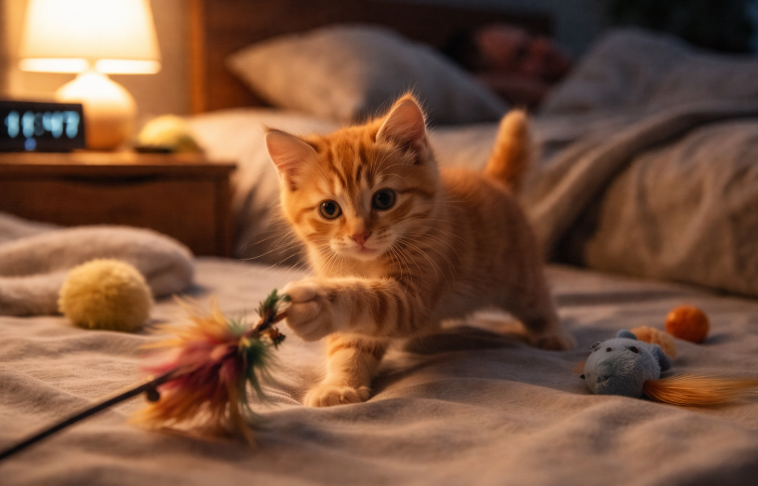
Interactive play is one of the best ways to manage this. Engaging your kitten in active play sessions during the evening can help reduce nighttime activity. Toys that mimic prey, such as feather wands or moving objects, are especially effective.
However, timing matters. Playing too early in the day may not have the desired effect. Instead, scheduling play sessions closer to bedtime helps burn off energy when it matters most. This approach can significantly reduce kitten active at night behavior.
Consistency also helps. When your kitten knows when to expect playtime, it becomes easier to establish a routine that aligns with your sleep schedule.
How Feeding Patterns Influence Behavior
Feeding habits are closely linked to kitten active at night behavior. In the wild, cats hunt, eat, and then rest. This natural cycle still influences your kitten’s behavior indoors.
If your kitten eats earlier in the evening, it may regain energy later at night. Therefore, adjusting feeding times can make a noticeable difference. Offering a meal after an evening play session encourages your kitten to relax and sleep afterward.
Additionally, smaller, more frequent meals can help stabilize energy levels. Instead of one large feeding, spreading meals throughout the day may reduce sudden bursts of activity.
When you align feeding with natural behavior patterns, it becomes easier to manage kitten active at night tendencies. Over time, this creates a smoother daily rhythm for both you and your pet.
Environmental Factors That Trigger Night Activity
Your home environment can also influence kitten active at night behavior. Quiet nighttime conditions often make sounds and movements more noticeable, which can trigger curiosity.
For example, small noises, shadows, or even passing lights can stimulate your kitten’s interest. Since there are fewer distractions at night, your kitten may focus more on these details and become more active.
Providing a stimulating environment during the day can help balance this. Window views, toys, and climbing structures give your kitten opportunities to explore and stay engaged. As a result, they may feel less need to seek stimulation at night.
Creating a calm nighttime environment also helps. Dimming lights and reducing noise signals to your kitten that it is time to rest. These small adjustments can gradually reduce kitten active at night behavior.
Building a Healthy Sleep Routine
Establishing a routine is one of the most effective ways to manage kitten active at night habits. Cats respond well to consistency, so a predictable schedule helps regulate their behavior.
Start by creating a sequence that includes play, feeding, and rest. An active play session followed by a meal encourages your kitten to settle down. This mimics their natural cycle and promotes relaxation.
In addition, avoid encouraging nighttime play. If your kitten wakes you up, responding with attention may reinforce the behavior. Instead, remain consistent and avoid engaging during those hours.
Over time, your kitten will begin to adjust to your schedule. While the process requires patience, a structured routine can significantly reduce kitten active at night disruptions.
When Night Activity May Signal a Problem
Although kitten active at night behavior is usually normal, there are situations where it may indicate an issue. Excessive activity combined with signs of stress or discomfort could point to underlying problems.
For example, if your kitten appears restless, vocalizes frequently, or shows signs of anxiety, it may need additional attention or environmental changes. In some cases, health concerns could also contribute to unusual behavior.
Monitoring your kitten’s overall behavior is important. If nighttime activity seems extreme or out of character, consulting a veterinarian can provide clarity. Early intervention helps address potential issues before they worsen.
Most of the time, however, kitten active at night habits are simply part of normal development and can be managed with the right approach.
Tips to Help You Sleep Better
Managing your kitten’s nighttime activity also involves protecting your own sleep. Simple strategies can make a big difference in maintaining your rest.
Keeping your bedroom door closed may help reduce disturbances. Providing your kitten with toys or a comfortable sleeping area outside your room can also keep them occupied.
White noise machines or soft background sounds can mask small noises that might otherwise trigger your kitten’s curiosity. This creates a calmer environment for both of you.
Consistency remains the most important factor. As your kitten learns your routine, it will gradually adapt. Over time, these adjustments reduce kitten active at night interruptions and create a more peaceful home.
Conclusion
Understanding why your kitten active at night behavior occurs allows you to manage it more effectively. Rather than trying to stop it completely, the goal is to guide that energy into healthier patterns. By focusing on play, feeding, environment, and routine, you can create a balanced schedule that works for both you and your kitten.
Although the adjustment period may take time, consistency leads to lasting results. Your kitten will gradually learn when to be active and when to rest. In the end, these small changes not only improve your sleep but also support your kitten’s overall well-being.
With patience and the right approach, nighttime activity becomes easier to manage, allowing you to enjoy a more harmonious relationship with your growing pet.
FAQ
- Why do kittens run around at night?
Kittens are naturally active during dawn and dusk due to their instincts, which often leads to nighttime bursts of energy. - How can I calm my kitten before bedtime?
Engaging in play followed by feeding helps your kitten relax and prepare for sleep. - Should I ignore my kitten at night?
Yes, avoiding attention during nighttime helps prevent reinforcing active behavior. - Can feeding schedule affect nighttime activity?
Yes, adjusting feeding times can help align your kitten’s energy levels with your routine. - When should I worry about nighttime behavior?
If activity is extreme or paired with signs of stress or illness, consult a veterinarian for guidance.