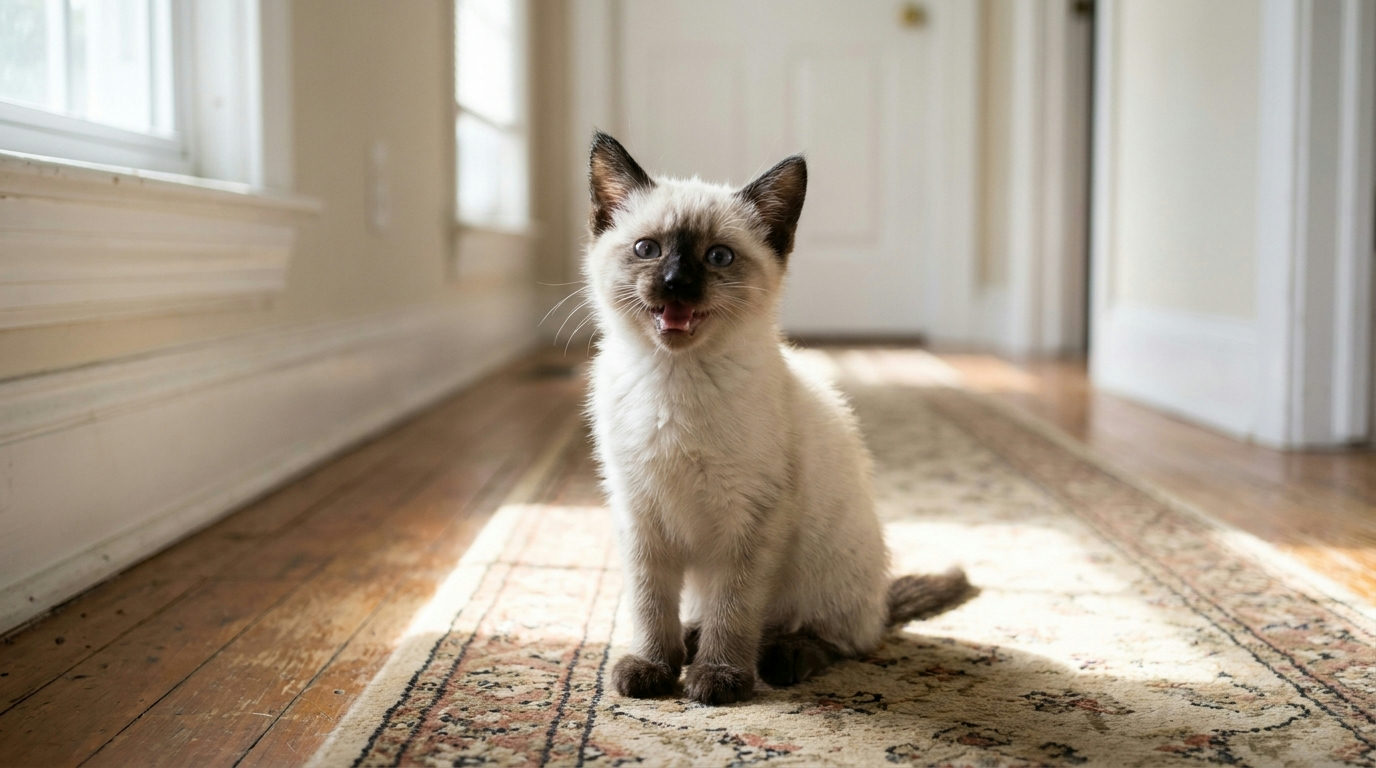
If you’re asking “why does my kitten meow so much,” you’re in good company. Kittens use their voices to get attention, ask for food, and tell you how they feel. Some chattiness is completely normal, especially in a new home. But sudden or constant crying can sometimes mean something is wrong. Here’s how to tell the difference and what to do.
This article may contain affiliate links. If you buy through them, Kitten Care Basics may earn a small commission at no extra cost to you. See our affiliate disclaimer.
Why Kittens Meow at All
Very young kittens meow to call their mother when they’re hungry, cold, or lost. Adult cats rarely meow at each other. Instead, many cats keep meowing mainly to communicate with people. So in a sense, your kitten is learning to “talk” to you.
Why Does My Kitten Meow So Much? Common Reasons
- Hunger. Kittens eat often, and many learn that meowing brings food.
- Attention and play. A bored kitten may meow to invite you to play.
- A new home. Kittens often cry more in the first days, while adjusting to new sights and smells.
- Missing littermates. A kitten recently separated from its family may call out, especially at night.
- Greeting you. Many kittens meow when you come home or wake up.
- Breed and personality. Some breeds, such as Siamese, are naturally more vocal.
- Frustration. A closed door or a toy stuck under the sofa can trigger complaints.
When Kitten Meowing May Signal a Problem
Contact your veterinarian if the meowing comes with any of these signs:
- Crying in the litter box or straining; see our guide to kitten constipation
- Not eating, vomiting, or diarrhea
- Hiding, limping, or flinching when touched
- A sudden change in voice or much louder crying than usual
- Restlessness and yowling in an unspayed female, which can signal heat
Pain and illness can make a kitten more vocal, so a vet check is always worth it when something seems off.
How to Help a Chatty Kitten
- Keep a steady routine. Regular meals and play times help your kitten know what to expect.
- Play before bed. A good play session followed by a meal often leads to a quieter night.
- Offer enrichment. Puzzle feeders, window perches, and toys reduce boredom. See our guide to safe toys for kittens.
- Reward quiet moments. Give attention and treats when your kitten is calm, not only when it’s loud.
- Use a timed feeder if early-morning meowing is about breakfast. Our guide to an automatic feeder for kittens explains how.
What Not to Do
Don’t shout, spray water, or punish your kitten for meowing. That can make it fearful and may increase stress-related crying. Also, try not to give in instantly to demanding meows every time, because that can teach your kitten that louder is better. Instead, wait for a quiet pause, then respond.
Meowing at Night
Night-time crying is especially common in new kittens. Make sure your kitten has a cozy bed, water, and a litter box nearby. A soft blanket that smells like home can help. For more on settling in, see our guide to bonding with your kitten.
The Bottom Line
So, why does my kitten meow so much? Usually, it’s hunger, boredom, or simply wanting you. With routine, play, and patience, most kittens settle into a comfortable level of chatter. For more on cat communication, visit International Cat Care.
This article is general information, not veterinary advice. If your kitten’s meowing changes suddenly or comes with other symptoms, contact your veterinarian.