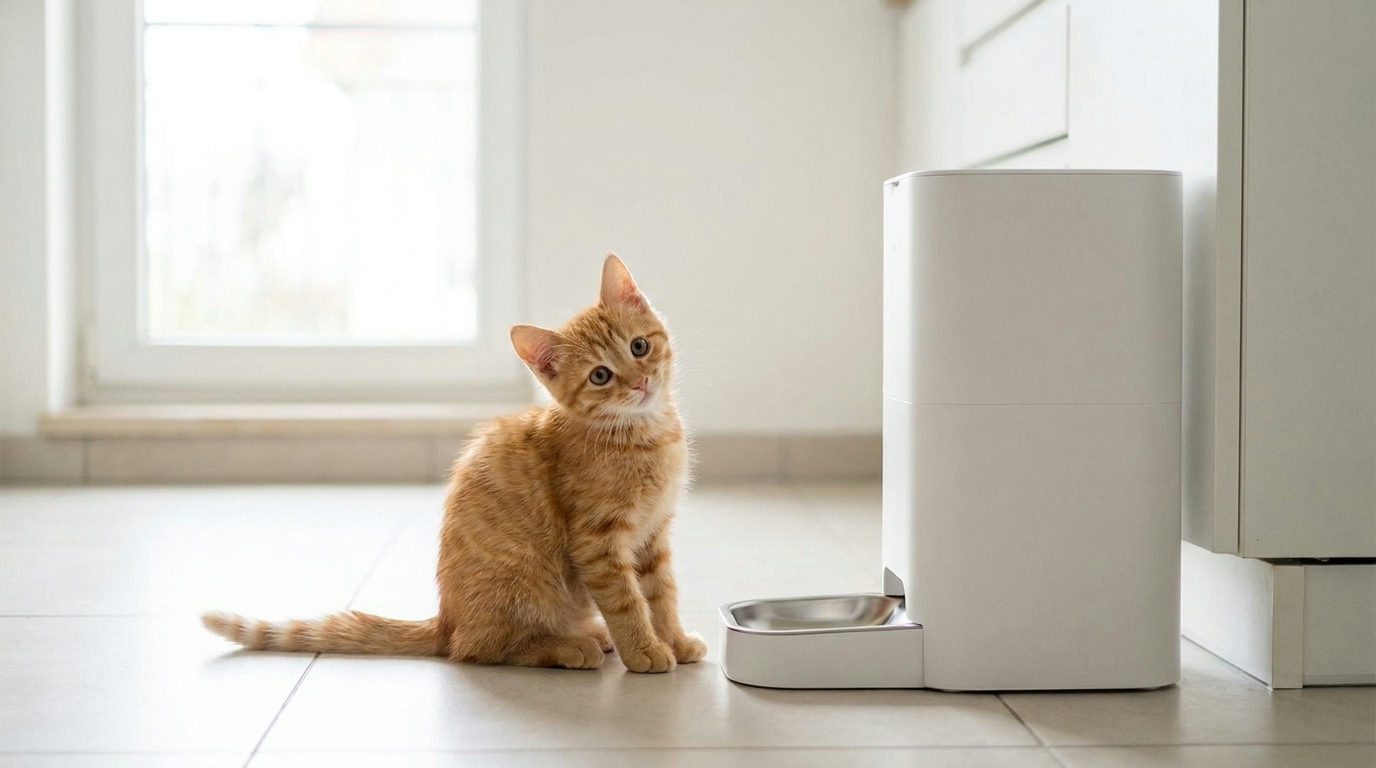
An automatic feeder for kittens can make busy days easier. Kittens need several small meals a day, and that schedule doesn’t always fit around work, school, or early mornings. A timed feeder releases measured portions at set times, which helps keep meals regular. However, it isn’t a replacement for daily care. Here’s how to choose one and use it well.
This article may contain affiliate links. If you buy through them, Kitten Care Basics may earn a small commission at no extra cost to you. See our affiliate disclaimer.
Benefits of an Automatic Feeder for Kittens
- Regular meal times. Kittens do well on a predictable routine.
- Portion control. Measured meals help prevent overeating, which matters as growth slows later.
- Help on busy days. A midday meal can arrive even when you’re out.
- Fewer early wake-up calls. A feeder set for breakfast may help a kitten stop waking you for food.
Limitations to Keep in Mind
- Most models work best with dry food; wet food spoils if left out
- You’ll miss the chance to notice if your kitten stops eating
- Mechanical or power problems can mean a missed meal
- A feeder doesn’t replace fresh water, play, or attention
So think of it as a helpful tool, not a way to leave a kitten alone for long periods. Our guide to leaving a kitten home alone explains how long is safe by age.
What to Look For in an Automatic Feeder for Kittens
- Small portion settings. Kittens eat small meals, so look for fine portion control.
- Multiple meals per day. Several scheduled meals suit growing kittens.
- Kitten-proof design. A locking lid and stable base stop curious paws from breaking in.
- Battery backup. This keeps meals on schedule during a power cut.
- Easy cleaning. Removable, washable bowls and hoppers keep food fresh.
- Jam-resistant dispensing, suited to the kibble size you use.
- Shallow bowl. A wide, shallow tray is comfortable for small faces.
Compare styles on our automatic feeders page, using this checklist.
How to Introduce the Feeder
- First, set it up while you’re home, next to your kitten’s usual feeding spot.
- Next, run a test meal and let your kitten watch and hear it.
- Reward curiosity with praise or a treat.
- For a few days, check that each meal dispenses correctly and your kitten eats it.
- Only then rely on it for a meal while you’re out.
Some kittens are startled by the motor sound at first. If so, go slowly and let your kitten get used to it.
Getting Portions Right
Start with the feeding guide on your kitten’s food, then divide the daily amount across meals. Your vet can help you adjust based on growth. Remember to count treats, too. Our kitten weight by age guide helps you check that your kitten is growing well.
Keep It Clean
Wash the bowl often and empty the hopper regularly, so oils in the kibble don’t go stale. Also, store extra food in a sealed container.
Is an Automatic Feeder Right for You?
An automatic feeder for kittens works best as part of a routine you still supervise. Keep checking that your kitten eats, drinks, and plays normally. If appetite changes, call your vet; our guide to a kitten not eating explains when. For more feeding tips, see our wet vs dry kitten food guide or visit International Cat Care.