Kitten constipation can be uncomfortable for your kitten and worrying for you. Most kittens pass stool at least once a day. If your kitten is straining, producing small hard stools, or skipping days, something may be off. This guide explains the signs, common causes, and when constipation needs a vet visit right away.
This article may contain affiliate links. If you buy through them, Kitten Care Basics may earn a small commission at no extra cost to you. See our affiliate disclaimer.
What’s Normal for a Kitten?
Healthy kittens usually pass formed, moist stool about once or twice a day. Frequency can vary with age and diet. Newborn kittens need their mother, or a caregiver, to stimulate them to go. Once kittens are eating solid food and using a litter box, they should go on their own.
Signs of Kitten Constipation
- Straining in the litter box with little or no result
- Small, hard, dry stools
- Going less than once a day, or skipping a day or more
- Crying or seeming uncomfortable when trying to go
- Reduced appetite or vomiting
- A firm or bloated belly
- Low energy
Important: Straining Isn’t Always Constipation
A cat straining in the litter box may actually be struggling to pee. A urinary blockage is a life-threatening emergency, especially in male cats. If your kitten strains but produces little or no urine, cries in the box, or keeps going back without results, contact a vet or emergency clinic immediately. Don’t wait to see whether it passes.
Common Causes of Kitten Constipation
- Dehydration. Not drinking enough is one of the most common causes.
- Diet changes. A sudden food switch can upset digestion.
- Hairballs. Swallowed fur can slow things down. See our guide to kitten hairballs.
- Intestinal parasites. Heavy worm burdens can affect the gut; our guide to kitten worm symptoms explains more.
- Stress or litter box problems. A dirty, badly placed, or disliked box may make a kitten hold it.
- Swallowed objects. String, fabric, or small toys can cause a blockage.
- Less activity. A kitten recovering from illness or surgery may move less and go less often.
When Kitten Constipation Needs a Vet
Call your veterinarian if your kitten:
- Hasn’t passed stool in more than a day or two
- Strains repeatedly or cries in the litter box
- Is vomiting, not eating, or seems lethargic
- Has a swollen or painful belly
- Has blood in the stool
- Is very young, since small kittens can become unwell quickly
Gentle Support at Home
Once your vet has ruled out anything serious, these steps may support healthy digestion:
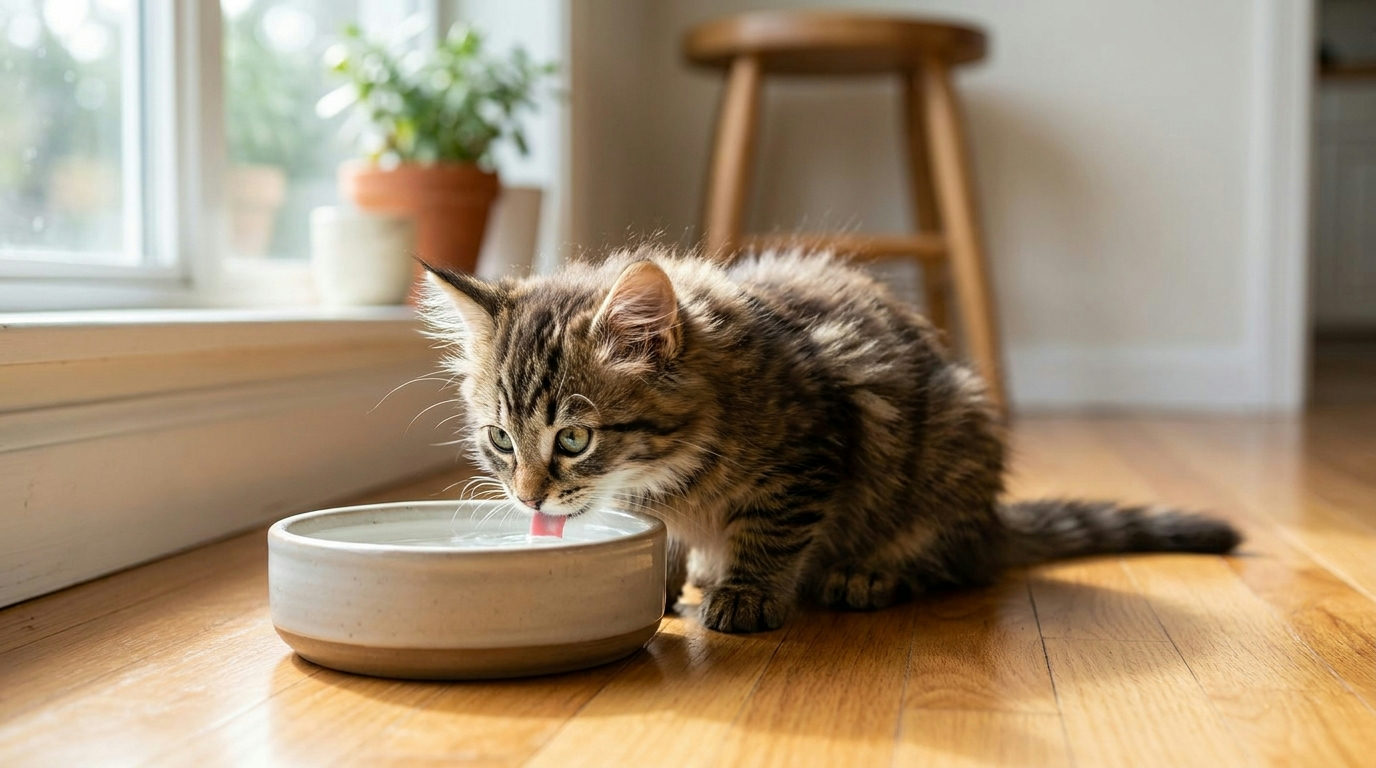
- Boost hydration. Offer several water bowls, and consider more wet food. Our kitten hydration guide has tips.
- Keep the litter box appealing. Scoop daily and use a litter your kitten likes; see our guide to the best litter for kittens.
- Encourage play. Movement helps the gut work normally.
- Brush regularly to reduce swallowed hair.
However, never give human laxatives, stool softeners, enemas, or oils without your vet’s instructions. Many are unsafe for cats, and some can be dangerous.
Preventing Constipation
- Change foods gradually over about a week
- Keep fresh water available at all times
- Follow your vet’s deworming schedule
- Keep strings and small objects out of reach
For more on kitten digestion, read our guide to kitten diarrhea or visit the Cornell Feline Health Center.
This article is general information, not veterinary advice. If your kitten is straining or hasn’t passed stool, contact your veterinarian.