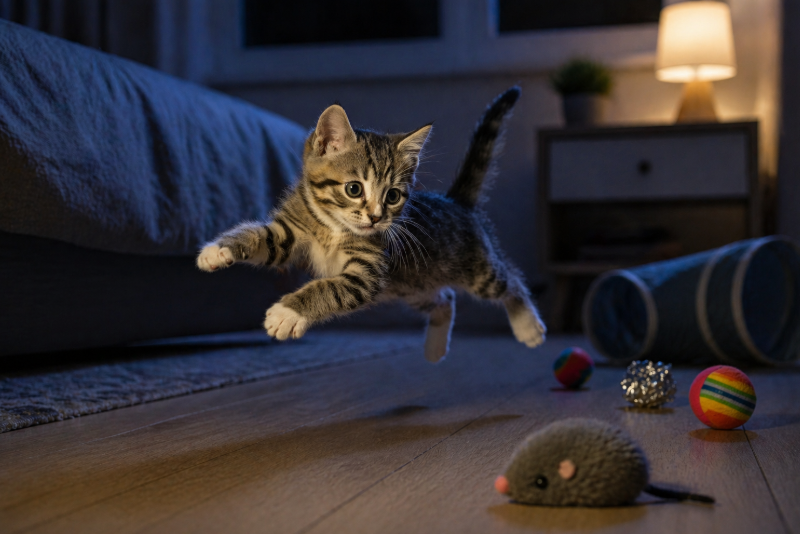
If you are trying to stop nighttime kitten zoomies, you are definitely not alone. Many new cat owners find themselves wide awake at night while their kitten runs, jumps, and races around the house like a tiny whirlwind. Although this behavior can seem chaotic, it is actually very normal. However, that does not mean you have to accept sleepless nights forever. With the right approach, you can gently guide your kitten into a calmer nighttime routine.
Kittens are naturally energetic, especially during the evening hours. In fact, cats are crepuscular, which means they are most active at dawn and dusk. Because of this, your kitten’s bursts of energy at night are part of their instinct. Still, learning how to stop nighttime kitten zoomies comes down to understanding their needs and adjusting their daily routine to match.
Why Kittens Get The Zoomies At Night
Before you can effectively stop nighttime kitten zoomies, it helps to understand what is driving this behavior. Most of the time, zoomies happen because your kitten has extra energy that has not been used during the day. Since indoor kittens often have fewer chances to hunt or explore, that energy builds up and releases all at once.
Additionally, kittens experience growth spurts and mental stimulation needs. As a result, their bodies and brains demand activity. When they do not get enough stimulation during the day, nighttime becomes their playground. Therefore, what feels like random chaos is actually your kitten trying to stay healthy and engaged.
Another important factor is routine. If your kitten naps frequently during the day without structured play, they will naturally be awake at night. So, if you want to stop nighttime kitten zoomies, you need to shift that energy to earlier hours.
Create A Structured Play Routine Before Bed
One of the most effective ways to stop nighttime kitten zoomies is to introduce a consistent play session before bedtime. This step mimics a natural hunt, which helps your kitten release energy in a controlled way.
Start by engaging your kitten with interactive toys such as feather wands or small moving objects. These toys encourage chasing, jumping, and pouncing, which closely resemble hunting behavior. As your kitten plays, they burn off the energy that would otherwise appear at night.
After playtime, offer a small meal. This sequence is important because it follows the natural cycle of hunt, eat, and sleep. Once your kitten eats, they are more likely to relax and settle down. Over time, this routine can significantly reduce nighttime activity.
Consistency is key here. If you repeat this pattern every evening, your kitten will begin to expect rest after play and feeding. As a result, it becomes easier to stop nighttime kitten zoomies without stress.
Adjust Daytime Activity To Prevent Energy Build Up
Another simple way to stop nighttime kitten zoomies is to focus on daytime engagement. If your kitten spends the entire day sleeping, it is no surprise they are active at night. Therefore, creating short play sessions throughout the day can make a big difference.
Instead of one long session, try multiple shorter bursts of activity. This approach keeps your kitten mentally stimulated and physically active. For example, you can use puzzle toys, climbing structures, or even simple cardboard boxes to encourage movement.
Additionally, rotating toys can keep things interesting. When kittens see the same toy all the time, they lose interest. However, introducing variety can spark curiosity and encourage more play during the day.
By increasing daytime stimulation, you gradually reduce the amount of stored energy. As a result, it becomes much easier to stop nighttime kitten zoomies naturally.
Set Up A Comfortable And Calming Sleep Environment
Sometimes, the key to stop nighttime kitten zoomies is not just activity but also environment. A calm and comfortable sleeping space can encourage your kitten to settle down more easily.
Start by creating a dedicated sleeping area that feels safe and warm. Soft bedding, a quiet location, and low lighting can make a big difference. Additionally, placing this area near where you sleep can provide reassurance, especially for younger kittens.
You can also introduce calming elements. For example, gentle background noise or a ticking clock can mimic the presence of other animals. These small touches can help reduce anxiety and encourage rest.
Moreover, avoid stimulating your kitten late at night. Bright lights, loud noises, or sudden play sessions can trigger another burst of energy. Instead, keep the environment calm and predictable to support better sleep habits.
Avoid Reinforcing Nighttime Attention-Seeking Behavior
While trying to stop nighttime kitten zoomies, many owners accidentally make the problem worse. This often happens when they respond to nighttime activity with attention.
For instance, if your kitten runs across the room and you react by talking, playing, or feeding them, they may learn that nighttime activity gets a reward. Over time, this reinforces the behavior.
Instead, remain calm and avoid engaging during these moments. Although it can be difficult at first, ignoring the behavior teaches your kitten that nighttime is not playtime. Gradually, they will adjust their expectations.
At the same time, make sure all their needs are met before bedtime. If your kitten is hungry, bored, or anxious, they are more likely to act out. Therefore, addressing these needs in advance makes it easier to stop nighttime kitten zoomies without confusion.
Use Gentle Training And Positive Reinforcement
Training plays an important role when you want to stop nighttime kitten zoomies. However, it should always be gentle and positive. Punishment or harsh reactions can create fear and worsen behavior.
Instead, reward calm behavior whenever possible. For example, if your kitten settles quietly in the evening, offer praise or a small treat. This reinforces the idea that calmness leads to positive outcomes.
You can also use cues to signal bedtime. Simple routines, such as dimming lights or speaking softly, help your kitten understand that it is time to relax. Over time, these signals become part of their routine.
Although training takes patience, it creates long-term results. As your kitten learns what to expect, it becomes easier to stop nighttime kitten zoomies in a consistent and stress-free way.
When To Be Patient And Let Kittens Grow Out Of It
Even with the best strategies, it is important to remember that kittens are still growing. Sometimes, the best way to stop nighttime kitten zoomies is simply to give them time.
Young kittens have high energy levels by nature. As they mature, their activity patterns often become more balanced. While training and routines help speed up this process, natural development also plays a role.
Therefore, patience is essential. Instead of expecting immediate results, focus on gradual improvement. Small changes in behavior can add up over time.
Additionally, keep in mind that every kitten is different. Some may calm down quickly, while others take longer. By staying consistent and understanding their needs, you can guide them toward better habits.
Conclusion
Learning how to stop nighttime kitten zoomies is all about balance. By combining structured play, proper feeding routines, and a calming environment, you can shift your kitten’s energy to more appropriate times of the day.
While it may take some effort, the results are worth it. Better sleep for you and a healthier routine for your kitten create a more peaceful home overall. With patience, consistency, and a little creativity, those midnight sprints can gradually turn into quiet nights.
In the end, your goal is not to eliminate your kitten’s natural energy but to guide it. Once you understand their behavior and respond in the right way, it becomes much easier to stop nighttime kitten zoomies and enjoy a more restful routine together.
FAQ
- Why do kittens suddenly run around at night?
Kittens often release stored energy at night, especially if they have not been active enough during the day. - Can I train my kitten to sleep through the night?
Yes, with consistent routines, play sessions, and feeding schedules, kittens can learn to rest during nighttime hours. - Should I play with my kitten at night to tire them out?
It is better to schedule play before bedtime, not during the night, to avoid reinforcing active behavior after dark. - How long do kitten zoomies usually last?
Zoomies are common in young kittens and usually decrease as they grow and develop more balanced energy levels. - Is it normal for kittens to be active at night?
Yes, kittens are naturally more active at dawn and dusk, but routines can help adjust their behavior.