Caring for a tiny kitten for the first time can feel overwhelming, especially when you realize how fragile they are. However, understanding newborn kitten care does not have to be complicated. With the right knowledge and a calm approach, you can provide everything your kitten needs to grow safely and comfortably. In fact, most problems can be avoided by focusing on a few key areas like warmth, feeding, and hygiene.
Newborn kittens are completely dependent during their first weeks of life. They cannot regulate their body temperature, and they rely on you for nutrition and stimulation. Therefore, learning proper newborn kitten care early helps prevent common mistakes and builds confidence as a first-time owner. As you move forward, you will notice that small daily routines make a big difference in your kitten’s development.
While the process may seem delicate, it becomes easier once you understand what your kitten truly needs. By staying consistent and attentive, you create a safe environment that supports healthy growth from the very beginning.
Keeping Your Kitten Warm And Comfortable
Temperature control is one of the most critical aspects of newborn kitten care. Newborn kittens cannot generate enough body heat on their own, so they depend on external warmth to survive. Without proper temperature support, they can quickly become weak or ill.
A warm, cozy space should be your first priority. You can use a soft blanket and a heating pad set on low, but always place a barrier between the pad and the kitten. This prevents overheating or burns while still providing gentle warmth.
Positioning also matters. Keep your kitten in a quiet, draft-free area away from sudden temperature changes. Consistency helps them feel secure and reduces stress. Additionally, check their body temperature regularly by feeling their paws and ears. If they feel cold, adjust the environment immediately.
Maintaining the right temperature is a simple yet powerful step in newborn kitten care, and it directly affects your kitten’s ability to eat and grow properly.
Feeding Basics For Healthy Growth
Feeding is another essential part of newborn kitten care. Since kittens cannot eat solid food, they rely on milk for nourishment. If the mother is not present, you will need to provide a kitten-specific formula.
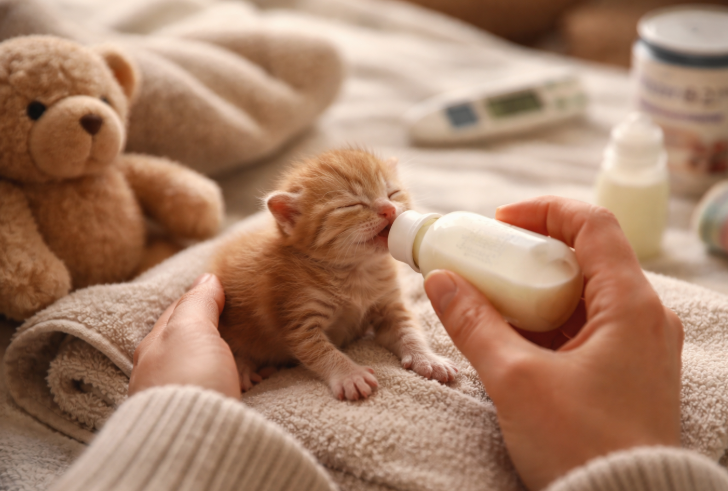
Bottle feeding requires patience and care. Hold your kitten in a natural, belly-down position, similar to how they would nurse from their mother. This prevents choking and supports proper digestion. Feed small amounts frequently, usually every two to three hours, depending on age.
It is important to avoid cow’s milk, as it can cause digestive issues. Instead, always use a formula designed specifically for kittens. This ensures they receive the right balance of nutrients.
As part of newborn kitten care, consistency in feeding times helps regulate digestion and promotes steady weight gain. Monitoring your kitten’s appetite and weight is also essential, as these are strong indicators of health.
Helping With Bathroom Needs
One aspect of newborn kitten care that surprises many first-time owners is the need to assist with elimination. Newborn kittens cannot urinate or defecate on their own, so they require stimulation after each feeding.
Using a soft, damp cloth, gently rub the kitten’s lower abdomen and genital area. This mimics the mother’s natural grooming behavior and encourages elimination. Continue this process until the kitten begins to go on its own, usually after a few weeks.
Cleanliness is important during this step. Always use a fresh cloth and ensure the area stays dry afterward. Maintaining hygiene reduces the risk of infection and keeps your kitten comfortable.
Although it may feel unusual at first, this routine quickly becomes a natural part of newborn kitten care. With consistency, your kitten will develop normal bodily functions over time.
Monitoring Health And Development
Keeping a close eye on your kitten’s health is a vital part of newborn kitten care. Since they are so small, even minor issues can escalate quickly if not addressed early.
Daily weight checks are one of the easiest ways to monitor progress. Healthy kittens gain weight steadily, so any sudden drop or lack of gain may signal a problem. Additionally, observe their behavior. Active movement, regular feeding, and consistent sleep patterns are positive signs.
Watch for warning signals such as lethargy, refusal to eat, or unusual breathing. If you notice any of these, it is important to consult a veterinarian as soon as possible.
Regular checkups also play a role in proper newborn kitten care. A professional can provide guidance, ensure your kitten is developing normally, and address any concerns early.
Creating A Safe And Calm Environment
A calm environment supports every aspect of newborn kitten care. Loud noises, frequent handling, or sudden changes can create stress, which may affect feeding and growth.
Set up a quiet space where your kitten can rest undisturbed. Limit handling to essential care tasks, especially during the first few weeks. As your kitten grows stronger, you can gradually introduce gentle interaction.
Lighting should also be soft and consistent. Bright or harsh lighting can be overwhelming for young kittens. A stable, low-stress environment allows them to focus on growing and developing.
By maintaining a calm space, you help your kitten feel secure. This sense of safety is a key element of successful newborn kitten care.
When To Start Socialization
While early weeks focus on survival, socialization becomes important as your kitten grows. Around two to three weeks of age, kittens begin to open their eyes and become more aware of their surroundings.
At this stage, gentle interaction can begin. Short, calm sessions help your kitten become comfortable with human contact. However, it is important to avoid overwhelming them. Keep interactions brief and positive.
Gradually increasing exposure to sounds and movements helps build confidence. This step in newborn kitten care lays the foundation for a well-adjusted adult cat.
Consistency is important here as well. Regular, gentle interaction creates familiarity and reduces fear. Over time, your kitten will become more curious and engaged.
Common Mistakes First-Time Owners Make
Many first-time owners make simple mistakes when learning newborn kitten care. One common issue is overhandling. While it is natural to want to cuddle your kitten, too much handling can cause stress.
Another mistake is inconsistent feeding. Skipping feedings or changing schedules can disrupt digestion and slow growth. Therefore, sticking to a regular routine is essential.
Improper temperature control is also a frequent problem. Kittens that are too cold or too hot can become unwell quickly. Monitoring their environment helps prevent these issues.
Additionally, using the wrong type of milk can lead to digestive complications. Always choose a proper kitten formula to ensure balanced nutrition.
By recognizing these mistakes early, you can avoid setbacks and improve your approach to newborn kitten care.
Building Confidence As A New Owner
As you continue learning newborn kitten care, your confidence will naturally grow. What once seemed complicated becomes part of your daily routine. Each small success reinforces your ability to provide proper care.
Staying patient is key. Mistakes may happen, but they are part of the learning process. What matters most is your willingness to adapt and improve.
Seeking guidance when needed is also important. Veterinarians and experienced pet owners can offer valuable advice that helps you refine your approach.
Over time, you will develop a deeper understanding of your kitten’s needs. This connection makes the experience more rewarding and strengthens your bond.
Conclusion
Mastering newborn kitten care may seem challenging at first, but it becomes manageable with the right knowledge and consistency. By focusing on warmth, feeding, hygiene, and a calm environment, you create a strong foundation for your kitten’s growth.
Each step you take supports their development and helps prevent common health issues. While the early weeks require extra attention, the effort pays off as your kitten becomes stronger and more independent.
With patience and care, you can provide a safe and nurturing start to your kitten’s life. In the end, your dedication ensures a healthy, happy companion for years to come.
FAQ
- How often should I feed a newborn kitten?
Newborn kittens usually need feeding every two to three hours, depending on their age and condition. - What temperature should kittens be kept at?
They should be kept in a warm environment, typically between 85–90°F during the first week. - When do kittens start using the litter box?
Most kittens begin using the litter box around three to four weeks of age. - Can I use regular milk for kittens?
No, regular milk can upset their stomach. Always use a kitten-specific formula. - When should I take my kitten to the vet?
It is best to schedule a checkup within the first few weeks or sooner if any health concerns arise.