Learning how to clean newborn kitten safely is an essential part of early kitten care. Newborn kittens are extremely delicate, and their bodies are not yet strong enough to handle typical grooming methods. Because of this, even simple cleaning must be done with care. While keeping them clean is important for health and comfort, doing it incorrectly can lead to stress, chilling, or skin irritation.
In most cases, a mother cat would naturally handle grooming. However, when she is not present, you must step in and take over this responsibility. Understanding how to clean newborn kitten safely allows you to maintain hygiene without causing harm. With the right approach, you can keep your kitten clean while also protecting their warmth and overall well-being.
Why Gentle Cleaning Is Important For Newborn Kittens
Before you clean newborn kitten safely, it helps to understand why gentle care is necessary. Newborn kittens have very sensitive skin and a limited ability to regulate body temperature. As a result, even small mistakes can lead to discomfort or health risks.
Unlike older cats, newborns cannot tolerate water exposure well. If they become wet, they can quickly lose body heat. This is why traditional bathing methods are not recommended at this stage. Instead, cleaning should focus on minimal moisture and maximum warmth.
Additionally, kittens rely on scent for comfort. Removing too much natural scent can make them feel stressed or unsettled. Therefore, when you clean newborn kitten safely, the goal is to remove dirt without disrupting their natural balance.
When Cleaning Is Actually Necessary
Not every situation requires cleaning, so it is important to know when to clean newborn kitten safely. In many cases, kittens remain clean with minimal intervention, especially if they are healthy and well cared for.
However, cleaning becomes necessary if the kitten has milk residue, waste buildup, or dirt on their fur. This is common with orphaned kittens, as they do not have a mother to groom them.
Additionally, after feeding or elimination assistance, small areas may need attention. Instead of cleaning the entire body, focus only on the affected area. This reduces stress and limits exposure to moisture.
By understanding when cleaning is needed, you avoid unnecessary handling and keep your kitten more comfortable.
The Safest Method To Clean Newborn Kittens
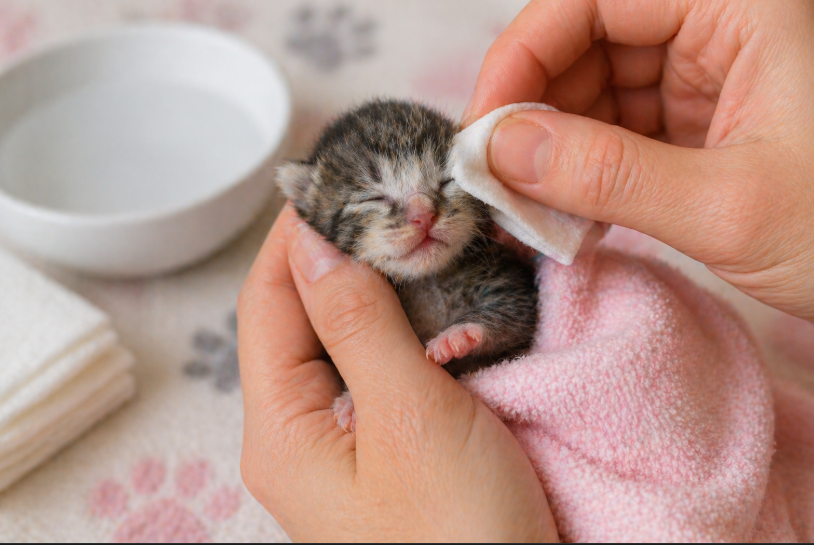
The best way to clean newborn kitten safely is by using a warm, damp cloth. This method mimics the gentle grooming of a mother cat without introducing too much moisture.
Start by using a soft cloth or cotton pad and dampen it with warm water. Make sure the cloth is not dripping, as excess water can chill the kitten. Gently wipe the affected area using light strokes.
After cleaning, dry the kitten immediately with a soft towel. Keeping them warm during and after the process is essential. You can also place them back in a warm nesting area to help maintain body temperature.
This simple method is effective and safe. It allows you to clean newborn kitten safely without exposing them to unnecessary risks.
How To Handle Messy Situations Without Stress
Sometimes, you may need to clean newborn kitten safely after more noticeable messes, such as diarrhea or spilled milk. In these situations, it is important to stay calm and avoid rushing.
Focus on cleaning only the areas that need attention. Avoid soaking the kitten or placing them under running water. Instead, use multiple damp cloths if needed to remove dirt gradually.
If the mess is stubborn, you can slightly increase moisture, but always keep it controlled. After cleaning, drying becomes even more important. Use a towel and ensure the kitten returns to a warm environment quickly.
By handling these situations carefully, you prevent stress while still maintaining hygiene.
Maintaining Warmth During Cleaning
One of the biggest risks when you clean newborn kitten safely is loss of body heat. Because kittens cannot regulate temperature, even brief exposure to cool air can be harmful.
To prevent this, prepare everything in advance. Have your cloth, towel, and warm space ready before you begin. This reduces the time your kitten is exposed.
Additionally, clean in a warm room away from drafts. If possible, keep part of the kitten’s body covered while cleaning the targeted area. This helps retain heat.
After cleaning, return the kitten to a heated nesting area immediately. This step ensures they stay comfortable and safe.
Avoiding Common Cleaning Mistakes
While trying to clean newborn kitten safely, certain mistakes can cause harm. One common error is using too much water. Excess moisture increases the risk of chilling and discomfort.
Another mistake is using harsh products. Soaps, shampoos, or wipes designed for humans can irritate a kitten’s skin. Even pet products should be avoided unless specifically recommended for newborns.
Rough handling is also a concern. Kittens are fragile, so gentle movements are essential. Always support their body and avoid sudden actions.
Additionally, cleaning too often can disrupt natural oils and cause dryness. Only clean when necessary to maintain balance.
Keeping The Nesting Area Clean Instead
A smart way to reduce the need to clean newborn kitten safely is by maintaining a clean environment. If the nesting area stays fresh, the kitten is less likely to become dirty.
Change bedding regularly to prevent buildup of waste or moisture. Use soft, absorbent materials that are easy to replace.
Additionally, keep feeding tools clean and dry. This reduces the chance of milk spills or residue that may require cleaning later.
By focusing on the environment, you minimize the need for direct cleaning. This approach supports both hygiene and comfort.
Monitoring Skin And Health While Cleaning
Every time you clean newborn kitten safely, take the opportunity to check their condition. Look for signs of irritation, redness, or dryness on the skin.
Healthy skin should appear smooth and clean. Any unusual changes may indicate a problem that needs attention. Early detection allows you to respond quickly.
Also, observe the kitten’s reaction during cleaning. If they seem overly stressed or uncomfortable, adjust your approach. Gentle handling and shorter sessions can make a big difference.
By combining cleaning with observation, you support overall health and well-being.
As Kittens Grow And Need Less Assistance
As your kitten develops, the need to clean newborn kitten safely will gradually decrease. Around a few weeks of age, kittens begin to groom themselves and maintain their own hygiene.
At this stage, you can reduce manual cleaning and allow natural behavior to take over. However, continue to monitor cleanliness and step in if necessary.
Transitioning gradually ensures that your kitten remains comfortable while gaining independence.
Conclusion
Knowing how to clean newborn kitten safely is a vital skill for anyone caring for young kittens. By using gentle methods, maintaining warmth, and avoiding unnecessary cleaning, you protect their delicate bodies while keeping them healthy.
Although the process requires attention and care, it becomes easier with practice. Each step you take supports your kitten’s comfort and development.
In the end, the goal is balance. By combining proper cleaning techniques with a clean environment, you create the best possible conditions for your kitten to grow strong and healthy.
FAQ
- Can I bathe a newborn kitten in water?
No, full baths are not recommended. Use a damp cloth instead to gently clean specific areas. - How often should I clean a newborn kitten?
Only clean when necessary, such as after feeding messes or elimination support. - What should I use to clean a kitten’s fur?
A soft cloth or cotton pad with warm water is the safest option. - How do I keep my kitten warm during cleaning?
Prepare a warm area and dry the kitten immediately after cleaning to prevent heat loss. - Is it safe to use wipes on newborn kittens?
Most wipes are not suitable. Stick to plain warm water and gentle cloths for safety.