Does catnip work on kittens? Many new owners are surprised when their kitten sniffs a catnip toy and walks away. The truth is that young kittens often don’t respond to catnip at all. Sensitivity usually develops as kittens mature, and some cats never react. Here’s what to know, plus safe ways to use catnip as your kitten grows.
This article may contain affiliate links. If you buy through them, Kitten Care Basics may earn a small commission at no extra cost to you. See our affiliate disclaimer.
What Is Catnip?
Catnip is a plant in the mint family. Its leaves and stems contain a natural compound called nepetalactone. When a sensitive cat smells it, the compound triggers a temporary reaction. That reaction can include rolling, rubbing, purring, playful bursts, or a relaxed, dreamy mood.
Does Catnip Work on Kittens at Every Age?
Usually not. Many kittens show little or no interest in catnip until they’re a few months old, often somewhere around three to six months. Before then, a catnip toy is just another toy.
In addition, the response is inherited. Not every adult cat reacts to catnip, even when fully grown. So if your kitten ignores it, that’s completely normal and nothing to worry about.
What a Catnip Reaction Looks Like
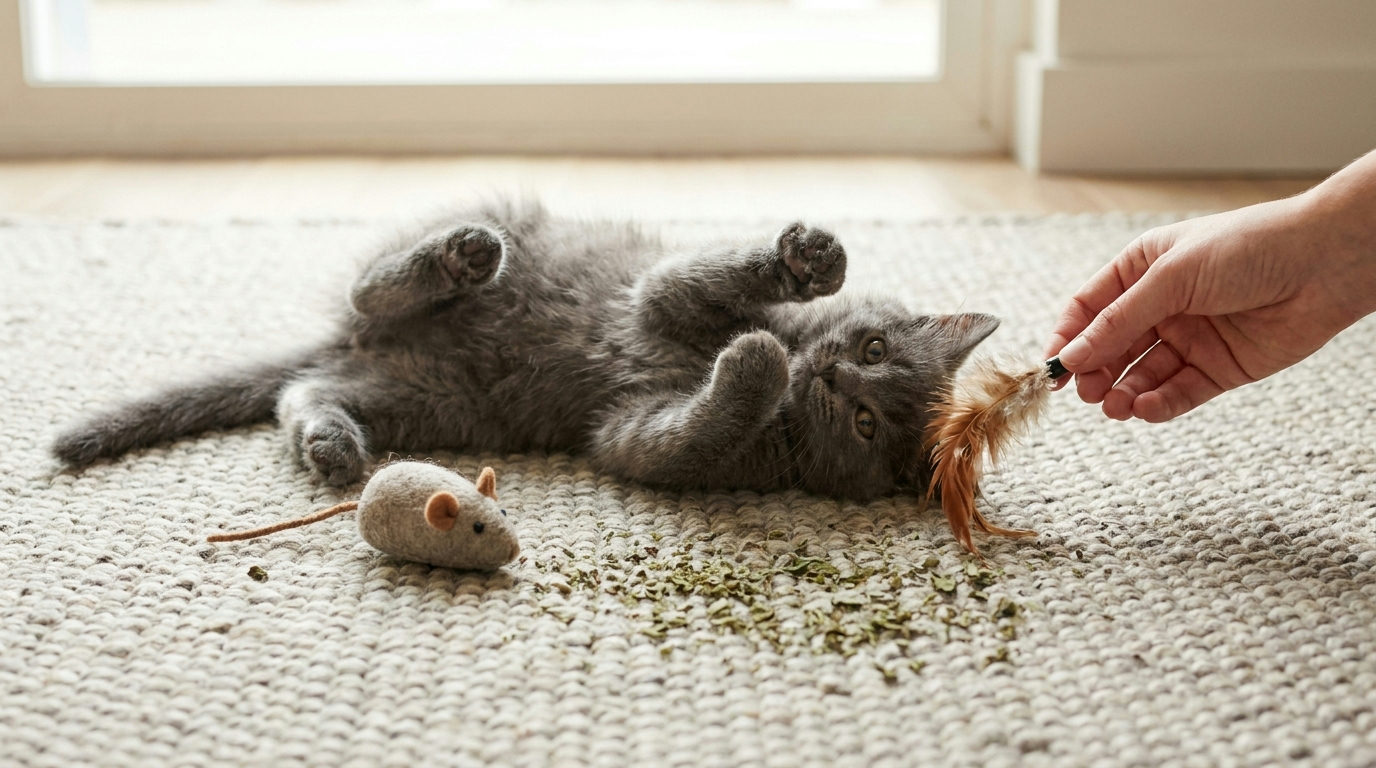
When a cat responds, you may see:
- Sniffing, licking, or chewing the catnip
- Rubbing the head and cheeks on it
- Rolling over and stretching
- Bursts of playful energy or zoomies
- A calm, relaxed state afterward
The effect typically lasts only several minutes. Afterward, many cats need some time before they’ll react again.
Is Catnip Safe for Kittens?
Catnip is generally considered safe for cats. It isn’t addictive. However, a few sensible precautions help:
- Offer small amounts; eating a lot may cause mild stomach upset
- Supervise play, especially with toys that have loose parts
- Watch for overexcitement, which can lead to rough play or swatting
- Store catnip in a sealed container, so your kitten can’t get into the whole supply
If your kitten vomits repeatedly or seems unwell after eating catnip, stop using it and call your vet.
How to Use Catnip as Your Kitten Grows
- Scratching posts. A light sprinkle can encourage scratching in the right place. See our guide to a scratching post for kittens.
- Cat trees and beds. Catnip can draw a kitten to a new perch or resting spot.
- Toys. Catnip-filled toys add novelty to play. Browse our catnip toys page for options.
- Carrier training. A little catnip may make the carrier more inviting; our carrier training guide explains more.
Keep catnip as an occasional treat, perhaps once or twice a week, so it stays exciting.
What If My Kitten Doesn’t React?
That’s okay. Some cats respond to other plants, such as silvervine or valerian root, instead. Ask your vet before trying anything new. Otherwise, plenty of interactive play meets your kitten’s needs just as well. Our kitten play enrichment guide has lots of ideas.
Does Catnip Work on Kittens? The Short Answer
Not usually at first. Many kittens start responding after a few months, and some never do. Either way, catnip is a fun, generally safe extra, not a necessity. For more on cat behavior and enrichment, visit International Cat Care.