
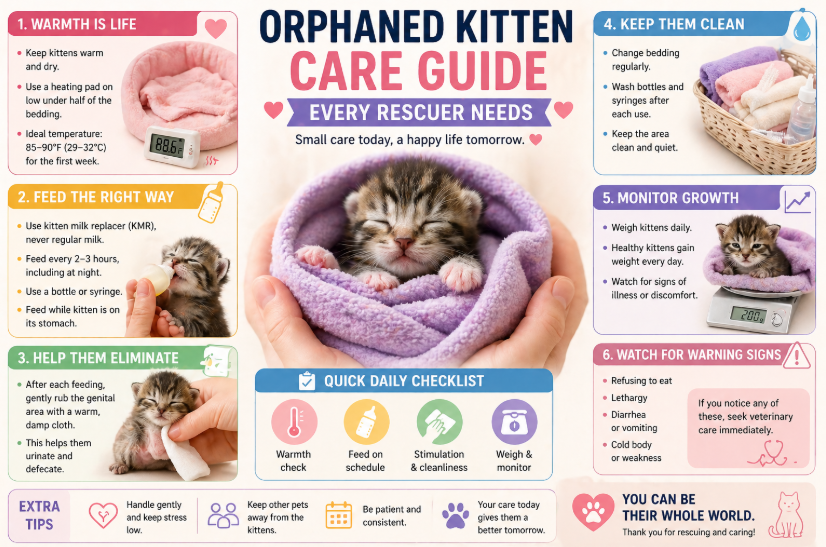
Caring for vulnerable newborns can feel overwhelming, but a clear orphaned kitten care guide makes the process manageable and safe. When kittens lose their mother, they depend entirely on human care for warmth, nutrition, and protection. Although the responsibility is serious, the right knowledge allows you to step in with confidence. With patience and consistent routines, you can give these kittens a strong and healthy start in life.
Many rescuers feel unsure at first, especially when dealing with such small and fragile animals. However, once you understand the essentials, everything becomes more structured. This orphaned kitten care guide will walk you through the most important steps so you can respond calmly and effectively in any situation.
Understanding The Needs Of Orphaned Kittens
Before following any orphaned kitten care guide, it is important to understand what newborn kittens actually need. Unlike older cats, they cannot regulate body temperature, eat solid food, or eliminate waste on their own. Because of this, they rely completely on external support.
Warmth is the first priority. Without a stable heat source, kittens can quickly become weak or unresponsive. Next comes feeding, which must be done frequently using proper milk replacer. Hydration and digestion also depend on correct feeding techniques.
Additionally, stimulation is necessary for elimination. Normally, a mother cat would handle this, but in her absence, you must assist gently. These basic needs form the foundation of any effective orphaned kitten care guide and must be addressed consistently.
Providing Safe Warmth From The Start
One of the most critical parts of an orphaned kitten care guide is learning how to keep kittens warm safely. Newborn kittens are extremely sensitive to temperature changes, and even a short exposure to cold can be dangerous.
To create a safe environment, prepare a nesting box lined with soft blankets. Place a heating pad under part of the bedding, not directly beneath the kittens. This allows them to move away if they become too warm. Alternatively, a warm water bottle wrapped in a towel can provide gentle heat.
Temperature should remain stable and appropriate for their age. During the first week, kittens need a warmer environment, which can gradually decrease as they grow. Monitoring conditions regularly helps prevent both chilling and overheating.
By following this step in your orphaned kitten care guide, you protect one of the most important aspects of survival.
Feeding Orphaned Kittens The Right Way
Feeding is another essential step in any orphaned kitten care guide, and it requires careful attention. Kittens must be fed a proper milk replacer, as regular milk is not suitable for their digestion.
Use a small bottle or syringe designed for kittens, and always feed them while they are positioned on their stomach. This prevents aspiration and supports natural feeding posture. Additionally, milk should be slightly warm, not hot, to match body temperature.
Frequency matters just as much as technique. Newborn kittens typically need feeding every two to three hours, including during the night. Although this can be demanding, it ensures steady growth and energy.
Consistency is key. By following a structured feeding routine, your orphaned kitten care guide becomes easier to manage and more effective.
Helping Kittens Eliminate Properly
A complete orphaned kitten care guide must include elimination support. Young kittens cannot urinate or defecate without stimulation, which means you need to assist after each feeding.
Use a soft, damp cloth or cotton pad and gently rub the kitten’s lower abdomen and genital area. This mimics the mother’s grooming behavior and encourages elimination. The process should be gentle and consistent to avoid discomfort.
Additionally, observe the results. Healthy elimination is a sign that feeding and hydration are working properly. Any changes in stool or difficulty urinating may indicate a problem that needs attention.
This step may seem small, but it is vital. Without it, kittens can develop serious health issues.
Maintaining Cleanliness And Hygiene
Cleanliness plays a major role in any orphaned kitten care guide, as kittens are highly vulnerable to infection. Their environment should remain clean, dry, and free from harmful bacteria.
Replace bedding regularly to prevent moisture buildup. At the same time, clean feeding equipment thoroughly after each use. This reduces the risk of contamination and supports healthy digestion.
Additionally, keep the kittens themselves clean. If necessary, use a warm, damp cloth to gently wipe their fur. Avoid full baths unless absolutely needed, as this can affect body temperature.
By maintaining proper hygiene, you create a safer and more stable environment for growth.
Monitoring Growth And Development
Tracking progress is an important part of any orphaned kitten care guide. Healthy kittens should gain weight steadily and show signs of increasing strength.
Weigh kittens daily using a small scale. Even small changes can provide valuable insight into their health. Consistent weight gain is a strong indicator that feeding and care routines are working.
In addition to weight, observe behavior. Active movement, regular feeding, and alert responses are all positive signs. On the other hand, lethargy or lack of appetite may require immediate attention.
By monitoring these factors closely, you can catch issues early and adjust your orphaned kitten care guide as needed.
Creating A Safe And Calm Environment
A calm environment supports both physical and emotional development, making it a key part of any orphaned kitten care guide. Kittens thrive in spaces that feel secure and predictable.
Keep the nesting area in a quiet location away from loud noises or heavy foot traffic. This helps reduce stress and encourages restful sleep. Additionally, avoid handling the kittens excessively during the early stages.
Gentle interaction is beneficial, but overstimulation can cause fatigue. Balance is important. As kittens grow stronger, you can gradually increase interaction and socialization.
By maintaining a peaceful environment, you help kittens develop confidence and stability.
Recognizing Signs Of Health Issues
Even with the best orphaned kitten care guide, problems can still arise. Knowing what to look for allows you to respond quickly.
Common warning signs include persistent crying, lack of appetite, diarrhea, or difficulty breathing. These symptoms may indicate underlying health concerns that need immediate attention.
Additionally, temperature changes can be a sign of trouble. Kittens that feel too cold or too warm require immediate adjustments to their environment.
When in doubt, seeking veterinary advice is always the safest option. Early intervention can make a significant difference in outcomes.
Transitioning As Kittens Grow
As kittens develop, your orphaned kitten care guide will gradually change. Around three to four weeks of age, kittens begin to explore their surroundings and show interest in solid food.
At this stage, you can introduce soft, kitten-safe food while continuing milk feedings. Gradual transition is important to avoid digestive issues.
Additionally, kittens will begin to regulate their body temperature more effectively. This allows you to slowly reduce external heat sources while maintaining comfort.
Social interaction also becomes more important during this phase. Gentle play and exposure to people help build confidence and prepare kittens for future homes.
Conclusion
Following a reliable orphaned kitten care guide can turn a challenging situation into a rewarding experience. By focusing on warmth, feeding, hygiene, and consistent routines, you provide the support these kittens need to survive and thrive.
Although the process requires dedication, each step becomes easier with practice. Over time, you will gain confidence and develop a rhythm that works for both you and the kittens.
In the end, your care plays a vital role in shaping their future. With patience and attention, you can give orphaned kittens the best possible start and help them grow into healthy, happy cats.
FAQ
- How often should orphaned kittens be fed?
Newborn kittens usually need feeding every two to three hours, including overnight, to maintain proper nutrition. - What is the best way to keep kittens warm?
Use a safe heat source like a heating pad under bedding or a wrapped warm bottle, ensuring kittens can move away if needed. - When can kittens start eating solid food?
Most kittens begin transitioning to soft food around three to four weeks of age. - How do I know if a kitten is healthy?
Steady weight gain, regular feeding, and active behavior are strong signs of good health. - What should I do if a kitten seems weak or unresponsive?
Warm the kitten immediately and seek veterinary help as soon as possible for proper care.