Learning how to keep newborn kittens warm is one of the most critical responsibilities when caring for fragile young cats. Unlike older kittens or adult cats, newborns cannot regulate their own body temperature. Because of this, even a short period of cold exposure can lead to serious health problems. However, while warmth is essential, it must be provided safely to avoid overheating or injury.
Newborn kittens depend entirely on external heat sources, especially if their mother is absent. Therefore, creating a controlled and stable environment is key. When done correctly, you can keep newborn kittens warm while also supporting their growth, comfort, and overall survival.
Why Temperature Control Is So Important For Newborn Kittens
Understanding why it is vital to keep newborn kittens warm helps you make better care decisions. During their first weeks of life, kittens cannot shiver effectively or generate enough body heat. As a result, their temperature can drop quickly if their environment is too cold.
When kittens become chilled, their digestion slows down. This means they cannot properly process food, even if they are being fed regularly. In severe cases, hypothermia can develop, which can be life-threatening. Because of this, maintaining a warm environment is not optional but essential.
At the same time, overheating is also dangerous. Kittens cannot easily move away from excessive heat, so they rely on you to create a balanced environment. Therefore, the goal is to keep newborn kittens warm without exposing them to extremes.
Ideal Temperature Range For Safe Kitten Care
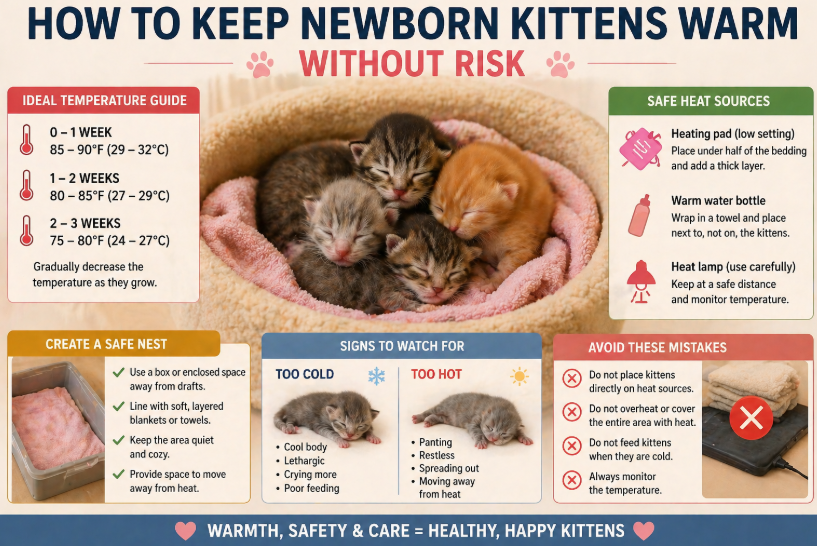
To safely keep newborn kittens warm, you need to understand the correct temperature range for each stage of development. During the first week, kittens require a warm environment of around 85 to 90 degrees Fahrenheit. As they grow, this temperature can gradually decrease.
By the second week, a range of 80 to 85 degrees is usually sufficient. Then, by the third week, temperatures can drop slightly to around 75 to 80 degrees. This gradual adjustment allows kittens to begin adapting while still staying comfortable.
Monitoring temperature consistently is important. Using a room thermometer or a heating device with a thermostat can help maintain stability. Sudden changes should be avoided, as they can stress the kittens and affect their health.
Safe Heat Sources You Can Use At Home
There are several safe methods to keep newborn kittens warm, and choosing the right one depends on your setup. Heating pads are a popular option, but they must be used carefully. Always place a thick layer of fabric between the pad and the kittens to prevent burns.
Additionally, use heating pads designed for pets if possible. These are often safer and provide consistent heat levels. Set the pad to a low setting and position it under only part of the bedding. This allows kittens to move away if they feel too warm.
Warm water bottles can also be effective. Wrap them in a towel and place them near the kittens, not directly against them. Replace the water regularly to maintain warmth.
Another option is a heat lamp, but it must be used with caution. Position it at a safe distance and monitor the temperature closely. Direct exposure can quickly lead to overheating.
Creating A Warm And Comfortable Nesting Area
To properly keep newborn kittens warm, you need to create a nesting area that supports both warmth and safety. Start with a sturdy box or enclosed space that protects the kittens from drafts. This helps maintain a stable temperature.
Line the area with soft blankets or towels. These materials provide insulation and comfort. Additionally, layering the bedding allows you to adjust warmth as needed.
Make sure the nesting area is not too crowded. While kittens benefit from being close together, they still need space to move slightly. This helps them regulate their comfort level.
Position the nesting area in a quiet part of your home. Avoid placing it near doors, windows, or air vents, as these areas can introduce temperature fluctuations.
Signs Your Kittens Are Too Cold Or Too Hot
Even when you aim to keep newborn kittens warm, it is important to watch for signs of discomfort. Kittens that are too cold may feel cool to the touch and become lethargic. They may also cry frequently or stop feeding properly.
On the other hand, kittens that are too warm may spread out away from each other. They may also appear restless or pant lightly. While panting is less common in very young kittens, it can still be a warning sign.
Regular observation helps you adjust conditions quickly. By responding early, you can prevent small issues from becoming serious problems.
Using Body Heat As A Natural Solution
In some situations, your own body heat can help keep newborn kittens warm. This method is especially useful if other heat sources are not immediately available. Holding a kitten gently against your body can provide temporary warmth and comfort.
However, this should not replace a proper heating setup. While it can be helpful in emergencies, kittens need consistent warmth that lasts throughout the day and night.
Still, combining body heat with a secure nesting area can be very effective. It also helps build trust and bonding between you and the kittens.
Avoid Common Mistakes That Can Harm Kittens
While trying to keep newborn kittens warm, certain mistakes can unintentionally cause harm. One common error is placing kittens directly on a heating source. This can lead to burns or overheating, especially if the heat is too intense.
Another mistake is using uneven heating. If the entire nesting area is too warm, kittens cannot move to a cooler spot. This can cause discomfort and stress.
Additionally, failing to monitor temperature regularly can create risks. Even safe heat sources can become dangerous if conditions change.
It is also important not to feed cold kittens. Always warm them first, as feeding a chilled kitten can lead to digestive problems.
Gradually Reducing Heat As Kittens Grow
As kittens develop, their ability to regulate body temperature improves. Therefore, you can slowly reduce external heat. This transition should be gradual to avoid shock or stress.
By the third to fourth week, kittens become more active and can tolerate slightly cooler temperatures. At this stage, you can begin lowering the heat source while still maintaining a comfortable environment.
However, continue to monitor their behavior closely. Each kitten may adjust at a different pace, so flexibility is important.
Conclusion
Learning how to keep newborn kittens warm safely is essential for their survival and development. By providing a stable environment, using safe heat sources, and monitoring their condition, you can protect them from both cold and overheating.
While the process requires attention and care, it becomes easier with experience. Consistency and observation are your best tools. When you understand your kittens’ needs, you can create a warm, secure space that supports healthy growth.
In the end, your effort to keep newborn kittens warm will directly impact their strength, comfort, and long-term well-being.
FAQ
- How do I know if a kitten is too cold?
A cold kitten may feel cool to the touch, appear weak, and have trouble feeding properly. - Can I use a regular heating pad for kittens?
Yes, but always use a low setting and place a thick barrier between the pad and the kittens. - Is it safe to use a heat lamp for kittens?
It can be safe if used carefully and positioned at a proper distance to avoid overheating. - How long do kittens need extra warmth?
Most kittens need external heat support for the first three to four weeks of life. - What should I do if a kitten becomes chilled?
Warm the kitten slowly using a safe heat source before attempting to feed or handle further.